

- HOME
- Expense Management
- Business Expense Categories: The Complete List with Examples (2026)
Business Expense Categories: The Complete List with Examples (2026)
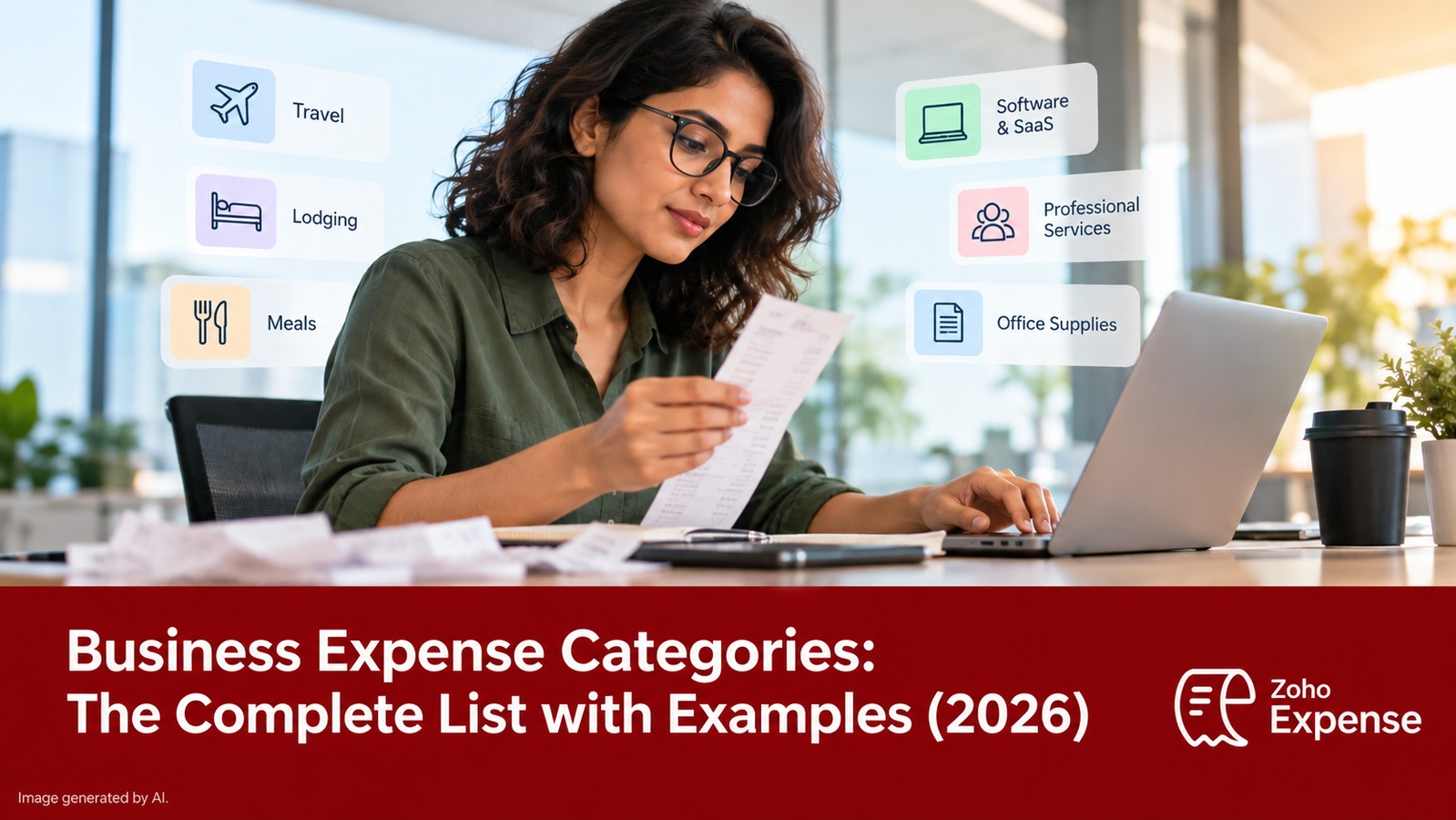
Business expense categories are standardized groups used to organize employee spending in an expense report. They help businesses reimburse employees accurately, generate meaningful financial reports, enforce spending policies, and maintain supporting records for accounting and tax purposes. Choosing the right category for each expense also makes expense reports easier to review, approve, and audit.
Whether you're creating your first expense policy or refining an existing one, understanding business expense categories is the foundation of effective expense management.
What is an expense report?
An expense report is a record of business-related expenses submitted by an employee for reimbursement or reconciliation. It typically includes the expense amount, date, merchant, receipt, payment method, business purpose, and expense category.
Accurate categorization benefits both employees and finance teams by:
- Speeding up reimbursements
- Improving financial reporting
- Supporting budget tracking
- Simplifying audits
- Helping identify spending trends
- Maintaining consistent records across the organization
Complete Business Expense Categories List
Category | Typical Examples |
|---|---|
Travel | Flights, taxis, trains, rideshare |
Lodging | Hotels, serviced apartments |
Meals | Client meals, employee meals during travel |
Mileage | Personal vehicle used for business |
Parking & Tolls | Airport parking, highway tolls |
Office Supplies | Paper, pens, notebooks |
Office Equipment | Laptops, monitors, printers |
Software & SaaS | Microsoft 365, Zoom, ChatGPT Team |
Telecommunications | Mobile bills, internet reimbursement |
Marketing | Online ads, brochures, sponsorships |
Professional Services | Legal, accounting, consulting |
Training & Education | Courses, certifications, conferences |
Memberships | Professional associations, journals |
Insurance | Business travel, liability insurance |
Shipping & Postage | Courier and postal charges |
Miscellaneous | Approved business expenses that don't fit another category |
Note: Organizations may customize categories to match their accounting structure, expense policy, or reporting requirements.
Business Expense Categories Explained
Travel
Travel expenses cover transportation required for business purposes, including airfare, rail travel, taxis, rideshare services, and public transportation. Parking, tolls, and mileage are often tracked as separate categories for more detailed reporting.
Lodging
Lodging includes accommodation during approved business travel, such as hotels and serviced apartments. Personal upgrades or leisure-related costs are typically handled according to company policy.
Meals
Meal expenses generally include food and beverages purchased while traveling for work or meeting clients. Many organizations define spending limits and documentation requirements for meal expenses.
Mileage
Mileage is commonly used when employees drive their personal vehicles for business. Rather than reimbursing fuel directly, many organizations reimburse business travel using an approved mileage rate.
Office Supplies and Equipment
Office supplies are consumable items such as printer paper, notebooks, and stationery. Office equipment includes longer-lasting assets like laptops, monitors, keyboards, and webcams. Some businesses account for high-value equipment differently based on their accounting policies.
Software & SaaS
Software subscriptions have become one of the fastest-growing business expense categories. Common examples include Microsoft 365, Zoom, Slack, Adobe Creative Cloud, and AI productivity tools. Maintaining a dedicated software category provides better visibility into recurring technology costs.
Professional Services
External expertise such as legal services, accounting, consulting, audit services, and freelance work generally falls under professional services.
Marketing
Marketing expenses include advertising campaigns, event sponsorships, printed collateral, social media advertising, and other promotional activities.
Regional Considerations
Business expense categories are broadly consistent worldwide, but the accounting and tax treatment of those expenses varies by jurisdiction.
United States
Businesses generally classify expenses according to their accounting policies while following applicable IRS guidance for deductions and documentation.
United Kingdom
Expense records should align with HMRC requirements. Certain expenses, such as business travel and employee subsistence, may have specific rules.
Canada
Businesses should maintain appropriate documentation and consider GST/HST requirements where applicable.
Australia
The ATO requires businesses to maintain records that support deductible business expenses and employee reimbursements.
India
Organizations should maintain valid invoices and supporting documentation while considering applicable Income Tax and GST requirements.
Because tax laws differ between countries and may change over time, businesses should rely on local regulations or qualified tax professionals when determining deductibility.
How to Choose Expense Categories for Your Company
An effective category structure should be easy for employees to understand while providing finance teams with meaningful reporting.
Consider these best practices:
- Keep category names simple and descriptive.
- Align categories with your accounting system.
- Separate high-volume spending such as travel and software.
- Avoid relying on "Miscellaneous" for routine expenses.
- Review categories periodically as your business evolves.
- Document examples for each category in your expense policy.
The goal is consistency, not creating as many categories as possible.
Common Categorization Mistakes
Incorrect categorization can delay approvals and reduce reporting accuracy. Some common mistakes include:
- Recording software subscriptions as office supplies.
- Combining parking charges with fuel expenses.
- Categorizing personal commuting as business travel.
- Using "Miscellaneous" instead of an existing category.
- Mixing client meals with internal team meals when separate policies apply.
Providing clear examples within your expense policy helps employees categorize expenses correctly from the start.
Frequently Asked Questions
What are business expense categories?
Business expense categories are standardized groups used to classify spending for expense reports, reimbursement, accounting, reporting, and budgeting.
What are the main business expense categories?
Most organizations use categories such as travel, lodging, meals, mileage, office supplies, office equipment, software, telecommunications, marketing, professional services, training, insurance, and shipping.
What category does software fall under?
Software subscriptions are typically categorized as Software & SaaS. Examples include Microsoft 365, Zoom, Slack, and AI productivity tools.
What category does a laptop belong to?
A laptop is generally categorized as Office Equipment or a similar asset category, depending on the organization's accounting policies.
Is internet reimbursement a business expense?
Yes. Internet reimbursement is commonly categorized under Telecommunications when employees require internet access for work.
Can businesses customize expense categories?
Yes. Organizations should tailor categories to match their reporting needs, accounting structure, and expense policy while keeping the system intuitive for employees
Organize Expense Reports with Consistent Categories
Clear business expense categories make expense reports easier to submit, review, approve, and analyze. They improve reimbursement accuracy, strengthen financial reporting, and provide better visibility into organizational spending.
As your business grows, periodically reviewing your expense categories—and ensuring employees understand when to use them—helps create a more efficient, consistent, and compliant expense management process.
