Event strategy: 10 steps to build successful events in 2026

A step-by-step guide to planning, running, and measuring events that meet business goals, from setting objectives before the event to following up after it.

Key takeaways:
  • Strategy comes before planning. An event strategy defines why you're hosting the event, who it's for, and what success looks like. Every logistics decision follows from it.
  • A strong strategy covers the full event lifecycle. Goals, audience, format, and budget are set before the event; check-in, engagement, and sponsor value are managed during it; follow-up and ROI analysis happen after it.
  • What you measure decides what you improve. Tie each goal to a metric, such as attendance rate, engagement, leads, or revenue, and track it on one platform so the next event starts with data, not guesswork.

Think about the last big event you attended. While the lights, speakers, and energy may have looked flawless, the reality behind the scenes could have been very different. From sessions running late to limited networking opportunities and sponsors questioning their ROI, even well-planned events can fall short without a clear strategy. Despite 77% of marketers considering events their most powerful marketing channel, delivering meaningful results requires more than flawless execution.

That’s where a well-defined event strategy comes in. This guide walks you through the key steps to building an effective event strategy, helping you align planning and execution with your goals. Along the way, we'll explore how Zoho Backstage can streamline event planning, keep essential tasks on track, and help you create more impactful events.

Event strategy guide

What an event strategy is and why you need one

What is event strategy?

An event strategy is the plan that connects an event to a business goal. It answers four questions before any booking is made: why are we organizing this event, who is it for, what outcome do we want, and how will we know we've succeeded?

The event strategy is the "why" and "what." The event plan is the "how" and "when": the venue, agenda, timelines, and tasks that put the strategy into action. For example, a strategy might be to strengthen customer relationships through a user conference; the plan covers the speaker lineup, sessions, and promotion schedule.

Why event strategy is important?

77% of marketers consider events their most powerful marketing channel, but an event only delivers when it's built around a clear goal. A defined strategy helps you:

  • Tie the event to business outcomes like pipeline, revenue, retention, or donations, instead of attendance alone.
  • Spend the budget where it matters by prioritizing what moves your goal and cutting what doesn't.
  • Design for the right audience, so the agenda, format, and networking match what attendees actually want.
  • Keep teams aligned across marketing, operations, sales, and partners with one shared direction.
  • Deliver value to sponsors and exhibitors, which makes them more likely to return.
  • Prove ROI with metrics agreed upon before the event, not chosen after it.
  • Avoid last-minute decisions, because contingencies are planned in advance.

How to build an event strategy in 10 steps

A complete event strategy covers three phases. Steps 1–6 happen before the event, steps 7–8 on the event day, and steps 9–10 after it.

Pre-event: Set the foundation

During the event: Deliver the experience

Post-event: Measure and build momentum

How to measure success of event strategy

Measure success against the goals you set in Step 1, not against generic benchmarks. These are the metrics most organizers track, and how to calculate each:

MetricWhat it tells youHow to measure it
Registration rateHow well your promotion converted interest into sign-upsRegistrations ÷ event page visitors × 100
Attendance rateHow many registrants actually showed upChecked-in attendees ÷ registrations × 100
Session attendanceWhich topics and speakers drew the most interestCheck-ins or joins per session, compared across tracks
Attendee engagementHow actively attendees participatedPoll responses, Q&A questions, app interactions, and networking chats per attendee
Attendee satisfactionHow attendees rated the overall experiencePost-event survey scores, such as an average rating or Net Promoter Score (NPS)
Leads generatedThe pipeline the event created for you and your exhibitorsLeads captured at booths and sessions, segmented by quality
RevenueThe direct financial returnTicket sales + sponsorships + exhibitor booth sales
Sponsor and exhibitor ROIWhether partners got enough value to returnLeads and booth visits per exhibitor, sponsor renewal rate
Social reachHow far the event traveled beyond attendeesMentions, shares, and hashtag use during and after the event
Event ROIWhether the event paid off overall(Total revenue or pipeline value − total cost) ÷ total cost × 100
Repeat attendanceHow loyal your audience isReturning attendees ÷ total attendees × 100

Common event strategy mistakes to avoid in 2026

Even the best of event strategists can make mistakes. Here are some common mistakes you should be careful of:

  • Setting vague goals. "More engagement" can't be measured. Tie every goal to a number and a deadline.
  • Choosing metrics after the event. Decide what you'll track before planning starts, or you'll end up measuring what's easy instead of what matters.
  • Planning for the organizer, not the attendee. Skipping audience research leads to agendas and formats people don't want.
  • Overloading the agenda. Back-to-back sessions with no breaks leave no time for networking, which is often why people attend.
  • Treating sponsors and exhibitors as an afterthought. If partners don't see leads or visibility, they won't return next year.
  • Running the event on disconnected tools. Separate apps for ticketing, check-in, engagement, and analytics create data gaps and extra manual work.
  • Skipping contingency plans. Have a backup for speaker cancellations, tech failures, and budget overruns.
  • Ending the strategy when the event ends. No follow-up means lost leads, and data collected but never analyzed won't improve the next event.

Tools required to build event strategy

Each step in your strategy needs a tool to put it into action. Zoho Backstage brings all of these into one platform:

ToolWhat it does for event strategy
Event website builderShares event details and converts visitors into registrants
Event ticketingSells tickets, manages discounts and approvals, with 0% commission
Event marketingPromotes the event through email, social banners, and affiliate marketing
Check-in and badgingSpeeds up entry with QR check-in, kiosks, and badge printing
Mobile event appGives attendees agendas and networking, and organizers on-the-go control
Attendee engagementDrives participation with polls, Q&A, matchmaking, and gamification
Sponsor managementManages sponsor tiers and visibility
Exhibitor managementHandles booth booking, floor plans, exhibitor portals, and lead capture
Event analyticsTracks revenue, check-ins, sessions, and attendee trends

Event strategy by use cases

The 10 steps apply to every event, but the priorities shift with the event type. Here's where to focus for the most common ones.

Corporate events

Product launches, customer meetups, sales kickoffs, and company offsites are usually tied to brand awareness, pipeline, or internal alignment.

  • Focus on: a clear business goal, invite-only or approval-based registration, and branded experiences.
  • Track: attendance rate, leads pushed to CRM, and post-event satisfaction.
  • Read more about corporate event planning guide.

Conferences and summits

Multi-day, multi-track conferences succeed on content quality and networking.

  • Focus on: a strong speaker lineup, multi-track agendas, personal schedules in the event app, and structured networking.
  • Track: session attendance, engagement per attendee, and repeat attendance.

Trade shows and expos

For expo management, exhibitor success is event success.

  • Focus on: an interactive floor plan for booth booking, exhibitor communication, brand pages, and on-site lead capture.
  • Track: booths sold, exhibitor revenue, leads per exhibitor, and exhibitor renewal rate.

Nonprofit events and fundraisers

Galas, charity runs, and awareness campaigns depend on keeping costs low and donors engaged.

  • Focus on: low-cost ticketing, sponsor visibility, and storytelling throughout the event.
  • Track: funds raised, cost per attendee, new donors, and sponsor renewals.

Education and academic events

Universities and institutes run admissions events, academic conferences, alumni meets, and workshops.

  • Focus on: session-level registration, check-in for multiple venues or zones, and certificates or follow-ups for participants.
  • Track: registrations by segment (students, alumni, faculty), session attendance, and feedback scores.

Build a successful event strategy with Zoho Backstage

Great events don't happen by chance; they are a result of proper event strategy, clear goals, and the right tools. Having a good event strategy ensures that your event provides the highest ROI possible and is linked to the big picture. If you feel stuck in your event strategy, then an event planning software like Zoho Backstage can help.

Zoho Backstage provides everything you need to put these strategies into practice. From ticketing and registration to attendee engagement and analytics, it helps streamline event strategy and event planning so you can focus on delivering meaningful experiences.

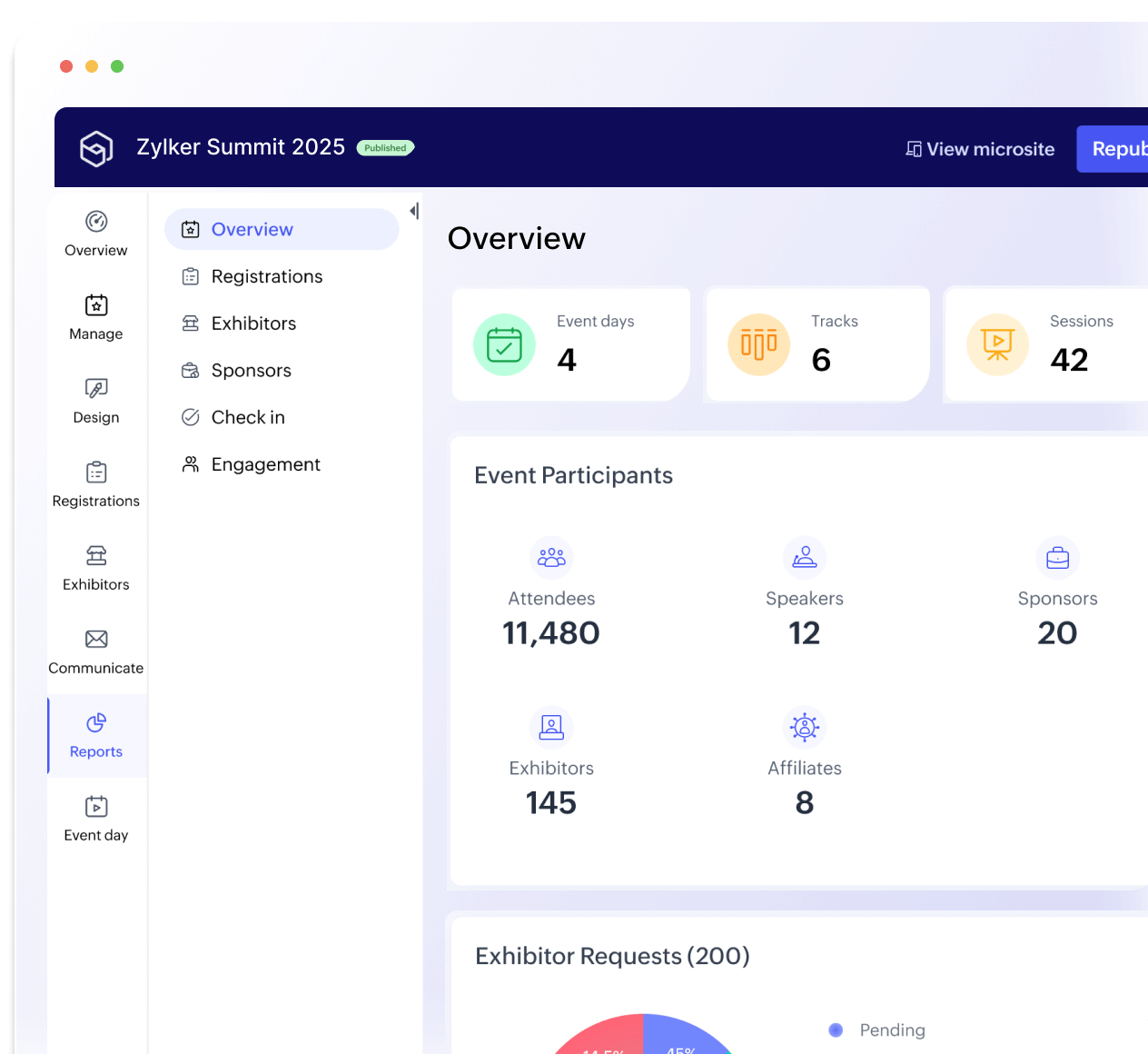
event management software dashboard

FAQs

Your goals should be specific enough to measure. Tie each goal to an outcome such as leads generated, attendee satisfaction score, or sponsorship revenue, with a target and a deadline.

A good rule of thumb is 60% structured sessions and 40% networking or breaks to keep attendees energized and engaged.

Your event budget depends on the event format. Virtual and hybrid events need a larger budget share for streaming and engagement tools. An all-in-one event platform like Zoho Backstage can lower this cost by replacing multiple separate tools.

Start with your audience. Consider where they are, what they value, and how accessible you need your event to be, then match the format to those needs.

Look at session participation, app interactions, sponsor leads, and post-event survey results for a fuller picture of success.