Why traditional invoicing slows down B2C businesses (and how to fix it)

PDF invoices sitting in inboxes are a conversion sink. They create friction, force manual chasing, and stretch DSO (days sales outstanding), a metric that tracks the average number of days it takes for a company to collect payment after a sale.
The fix is simple in concept and powerful in practice: issue invoices digitally, add a one-click pay option, and pair that with conversational automation to nudge, clarify, and close all the way to reconciliation.
This article shows how B2C teams can cut payment processing times, save staff hours, and improve cash flow by connecting Zoho Books with their customer messaging channels on WhatsApp and Instagram.
The problem in plain terms: Invoices that don’t make it easy to pay
Traditional invoicing typically follows the same passive playbook: create an invoice as a PDF, email it, and hope the customer opens the message, reads it, and clicks a payment link or waits for your follow-up.
That’s a lot of hope and very little momentum.
The consequences are real and measurable. Small business surveys show an average of $17.5K in outstanding invoices, and nearly half (47%) report invoices overdue by over 30 days—a direct drag on working capital and hiring plans.
Worse: chasing unpaid invoices eats staff time. In one study cited by regulators and business groups, affected businesses spend 86 hours per year chasing payments—time that could be spent on growth, product, or customer success.
Put simply: slow invoices equal slow growth.
Why PDFs in emails fail
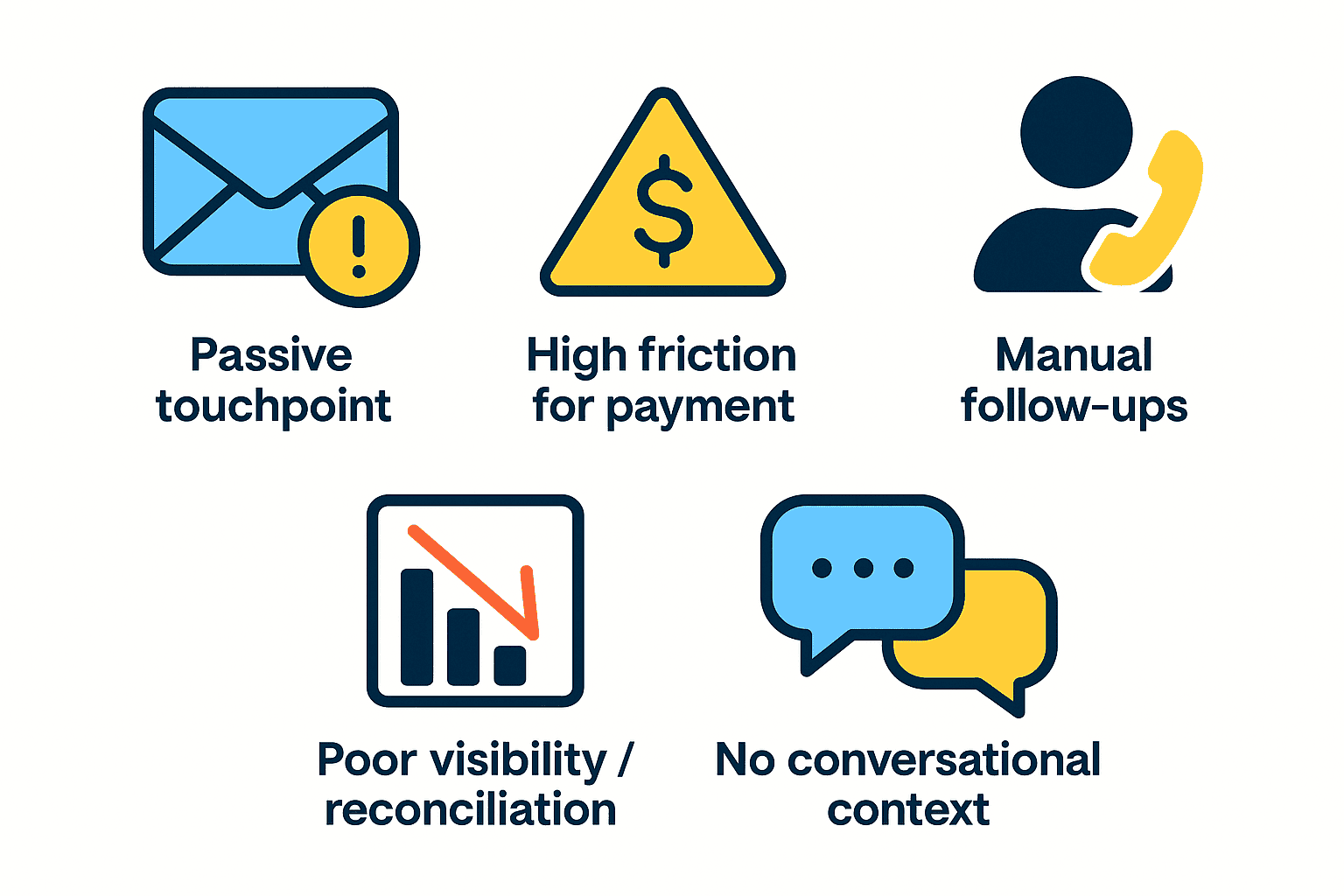
Passive touchpoint: The responsibility is on the customers to act first (open, read, and click). Most don't.
High friction for payment: Multiple redirects, payment pages, and fields increase the chances of drop-offs at various points.
Manual follow-ups: Teams spend hours calling or emailing to chase payments.
Poor visibility and reconciliation: Manual payment methods complicate bookkeeping.
No conversational context: Questions about the invoice (clarifications, discounts, and disputes) often lead to back-and-forth exchanges that delay collections.
These issues raise DSO, leading to increased reliance on credit lines or fundraising to bridge cash gaps.
Faster invoices + conversation = payments
There are two parts to the fix:
1. Make paying as frictionless as possible: Issue e-invoices (with immediate payment buttons) and support local payment methods (cards, UPI, and ACH).
2. Turn the payment touchpoint into a conversation: People are becoming increasingly comfortable talking to businesses and even completing transactions over WhatsApp and Instagram DMs.
Turn the payment touchpoint into a conversation. Use these chat channels to confirm intent, answer questions, send reminders, and, most importantly, hand the conversation over to a human agent in real time when needed. Conversational automation reduces follow-up time, builds trust, and helps close payments faster. Gallabox specializes in creating these seamless conversation flows and smart routing.
Together, these two moves reduce friction at both the technical and human levels.
Why Zoho Books and messaging automation tools work best
Zoho Books is a mature accounting and invoicing tool that supports digital invoices, scheduled reminders, and multiple payment gateways. It gives finance teams secure, encrypted, and compliant records that are easy to track and audit.
A messaging automation tool sits on top of the conversational layer: WhatsApp and Instagram automation, chatbot qualification, broadcast and drip sequences, and a shared inbox for live agent handovers.
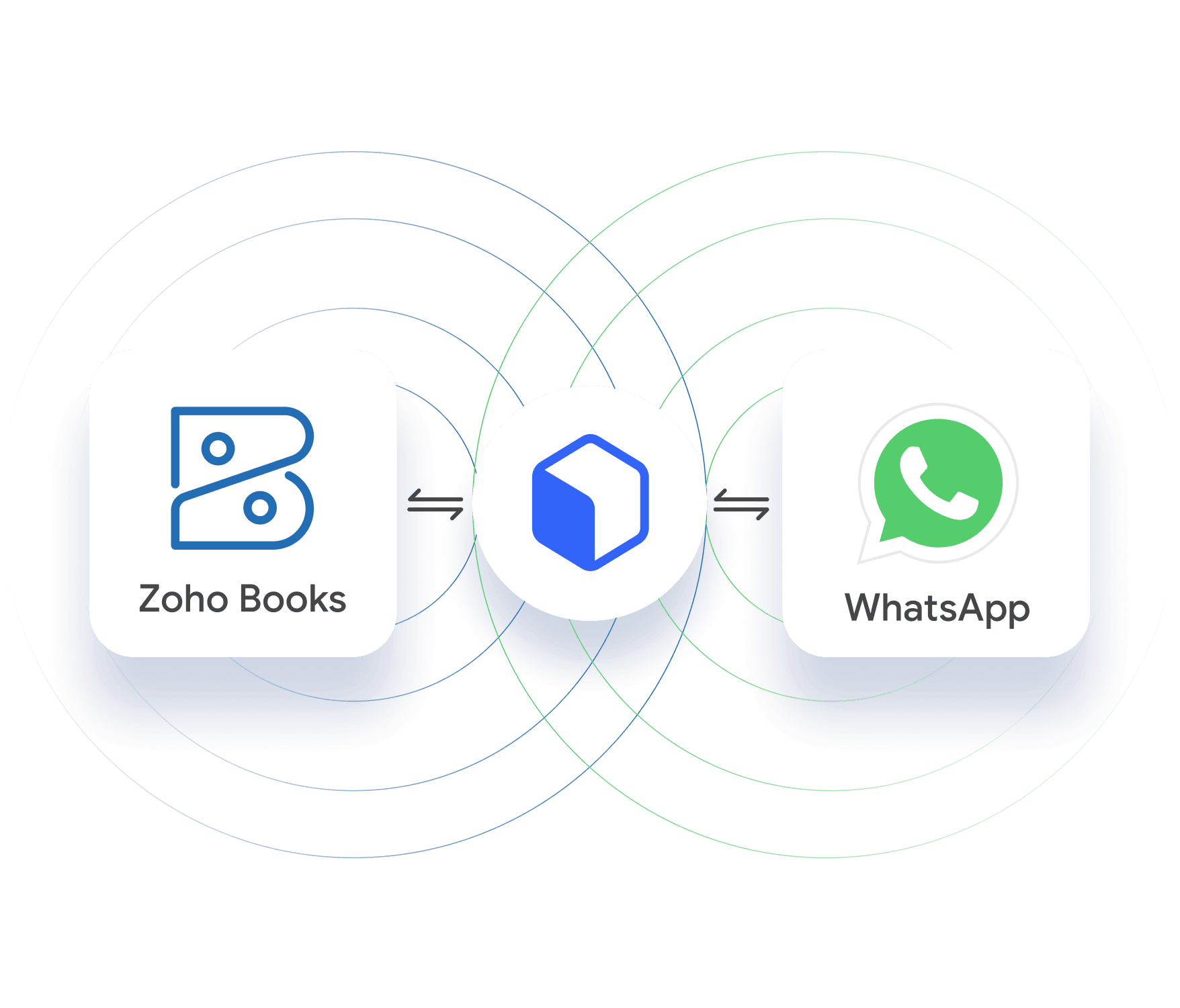
Combined, they let you:
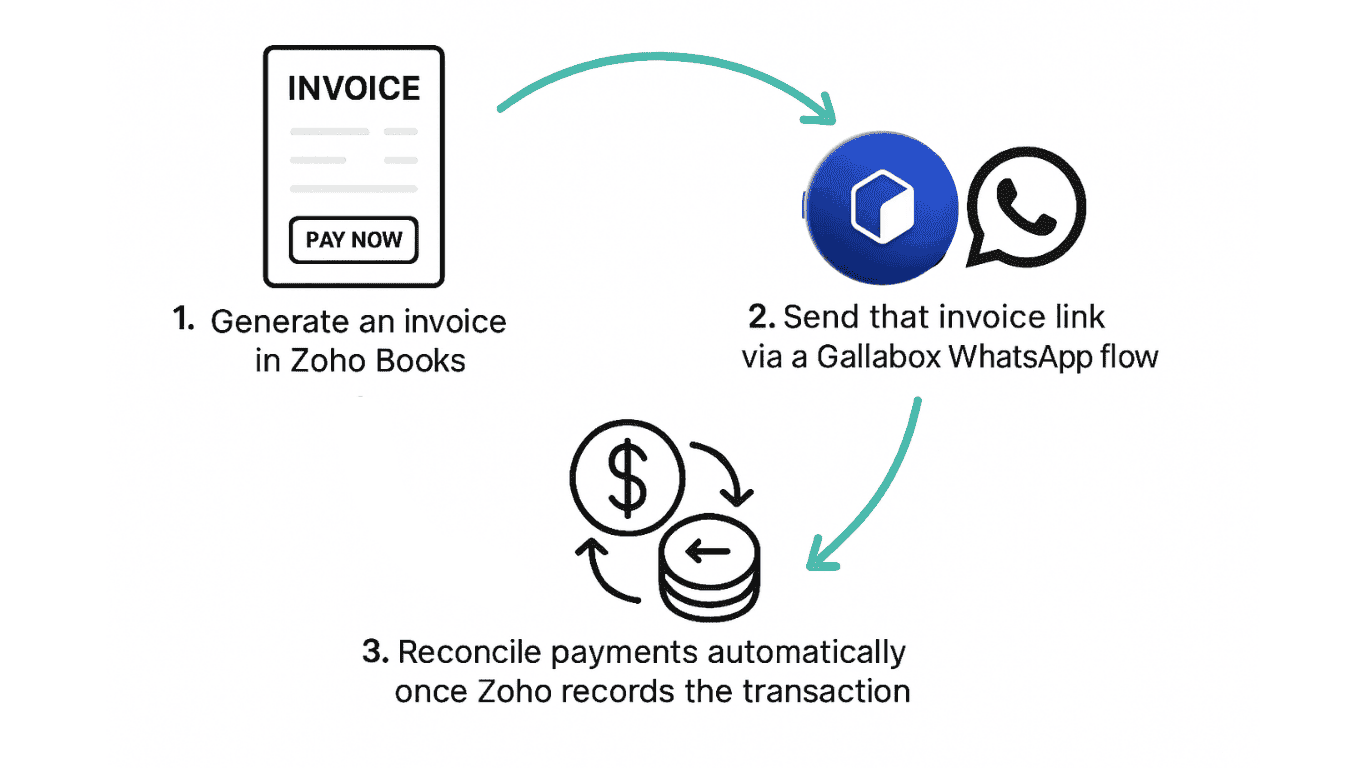
Generate an invoice in Zoho Books and include a direct immediate payment link.
Send that invoice link via a flow that confirms details, answers FAQs via AI chatbots, offers incentives or discounts, and hands over the conversation to a human agent if necessary.
Reconcile payments automatically once Zoho records the transaction, preserving financial controls.
Start with data, not hype
The evidence is plain: slow invoicing costs cash and time. The practical fix — digital invoices with one-click pay plus conversational automation — is already implementable with modern stacks like Zoho Books and Gallabox. The advantage of this approach is that it addresses both technical friction and human hesitation: you make it easy to pay, ask questions, and get trust-building answers in real time to complete the transactions.
But what does this look like in action?
In the next article, we’ll share plug-and-play workflows across retail, education, healthcare, and real estate along with a compliance checklist and performance KPIs to help you design, pilot, and scale conversational invoicing confidently.
Comments