

- HOME
- Taxes & compliance
- Landlord and sole trader: How MTD actually works when you're both
Landlord and sole trader: How MTD actually works when you're both
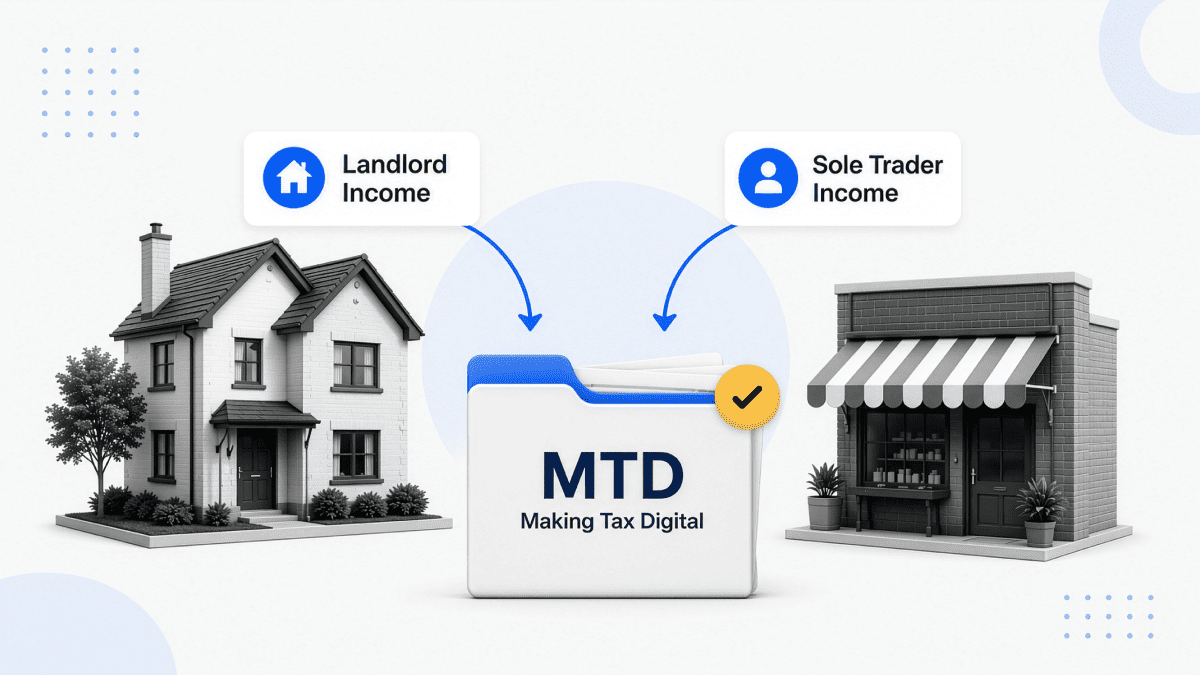
There's a mistake a lot of people make when they first look at Making Tax Digital. They see two income streams, check each one against the threshold separately, and conclude the rules don't apply to them yet. It's a reasonable assumption, but it's wrong.
Take someone with rental income of £23,000 and freelance turnover of £29,500. Neither figure clears £50,000 on its own. It's easy to see why they'd think they're fine. However, HMRC doesn't assess each activity in isolation; it adds the two together. That person's qualifying income is £52,500, and they could be required to join MTD even though, individually, neither business comes close to the limit.
This is the part of the system that catches people off guard: Your income is combined to decide whether you're in scope, but once you are, each business gets treated separately.
What actually counts toward the threshold
MTD qualifying income is your total gross income from self-employment and property—before expenses, before allowances, and before any deductions. A sole trader who earns £31,000 in turnover but only clears £17,000 profit after costs is still contributing £31,000 toward the qualifying income calculation.
That matters more than people expect. A photographer with £31,000 in business income and £22,000 in rental income has qualifying income of £53,000, regardless of what they net after studio costs, repairs, and letting fees.
What doesn't count: your salary, pension, dividends, savings interest. A PAYE employee earning £40,000 who also receives £15,000 in rent isn't pushed into MTD by the salary. But £28,000 of sole trader turnover combined with £25,000 of rental income? That's £53,000 and a different story.
Partnership income sits in a slightly odd position: Your share of profits doesn't count toward the threshold calculation, though it still needs to appear on your final tax return.
Which year triggers your start date?
MTD doesn't switch on the moment your income crosses a threshold in real time. HMRC looks at the qualifying income shown on an earlier Self Assessment return and works forward from there.
Income shown for | If income exceeds | You start from |
2024–25 | £50,000 | 6 April 2026 |
2025–26 | £30,000 | 6 April 2027 |
2026–27 | £20,000 | 6 April 2028 |
Notice it's "more than" each figure—someone whose qualifying income is exactly £50,000 doesn't fall into the first tranche.
HMRC may write to people it identifies from past returns, but don't rely on that letter arriving. If you have both property and business income, the only safe approach is to check your own position, add the gross figures together, and see where you land.
Combined for the test, separate for the records
Being brought into MTD doesn't mean merging your rental and trading records into one. You keep them apart. Once you're in scope, you need separate digital records for the sole trade and the property business. Each set of records needs to show the amount, date, and category for each transaction. A repair on your rental is a property expense. Software you use in your consultancy is a trading expense. They don't cross over, and mixing them up makes your figures harder to understand—and easier to put in the wrong box on the return.
Quarterly updates then go out separately, too. That's one for the sole trade and one for the property business, four times a year. That's potentially eight submissions across the year.
If you have more than one sole trader business, those normally need separate records and separate updates. The property side works differently: Multiple rental properties are treated as a single UK property business and the figures are consolidated for the update, even if you find it useful to keep individual property records behind the scenes.
Joint ownership and what counts as your share
If you own a rental property with someone else, only your share of the income counts toward your MTD calculation.
Two siblings co-owning a property that generates £30,000 gross rent would each bring £15,000 into their own qualifying income total. One of them might cross the MTD threshold because they also run a business; the other might stay well clear if property is their only qualifying income.
Joint owners also have a bit of flexibility during the year. They can report their share of income in quarterly updates without including their portion of joint expenses each time. Those expenses still need to be dealt with eventually, before the final return is submitted.
Where someone owns an additional property in their own name, the income and expenses from that one go straight into the quarterly property figures.
What goes into a quarterly update
A quarterly update isn't a mini tax return. It's a cumulative summary drawn from your digital records—income and expense totals by category, sent to HMRC. No invoices, no tenancy agreements, no receipts.
The updates run on a rolling year-to-date basis.
First update: 6 April to 5 July, due 7 August
Second update: 6 April to 5 October, due 7 November
Third update: 6 April to 5 January, due 7 February
Fourth update: 6 April to 5 April, due 7 May
Each update covers the whole year from 6 April, not just the three months since the last one. That means a correction made in January flows automatically into the next update—you're not reopening three previous submissions.
Businesses running a 1 April to 31 March year can use calendar periods with slightly different boundaries, though the submission deadlines stay the same.
Not everything needs to be finalised before each update. Something like a mixed personal-and-business cost can be sorted out when you do the year-end. The quarterly process is mainly about keeping your records current and giving HMRC a running picture of where things stand.
The tax estimate isn't a bill
After sending an update, your software will probably show an estimated tax position. That can be genuinely useful for setting money aside throughout the year.
What it isn't is a final figure. It won't account for capital allowances, losses, reliefs, or income HMRC hasn't been told about yet—dividends, savings interest, capital gains, that sort of thing. The estimate will shift as the year progresses and more of that information comes in.
The year-end process still matters for exactly this reason. MTD changes how your information gets to HMRC, but it doesn't remove the need to review your full tax position properly.
After the fourth update
Once the tax year closes, you go through both sets of records. Add anything missing, fix any errors, and deal with any adjustments that weren't appropriate to handle mid-year.
Then you bring in the rest—other income sources, information HMRC already holds, reliefs and allowances—and submit the full return through compatible software.
For someone who started MTD on 6 April 2026, the return for 2026–27 and the associated payment are both due by 31 January 2028. The final return is where both sides of your income meet again and your overall income tax position is worked out.
Small side income isn't automatically exempt
One area worth being careful about is if you previously declared a small source of income—even below the property allowance or trading allowance—it may still need to go into your MTD records once you're in scope.
The exception is income that genuinely didn't have to be declared on your previous return because it was below the relevant allowance. Whether that applies depends on what you earned and exactly what appeared on your return. If you have a very small secondary income, check your position properly rather than assuming you can leave it out.
Leaving MTD isn't immediate
One more thing worth knowing is if your income falls below the threshold, you can't just step back out again straight away. You need three consecutive tax years with qualifying income below the relevant limit before HMRC allows you to stop using MTD. The only exception is if all of your self-employment and property sources have completely ceased. In that case, you can notify HMRC directly. You might still need to file a return for other reasons, but that would be on a case-by-case basis.
In practice
The cleanest way to handle all of this is to treat your rental and trading income as two separate businesses from day one, even when you're the same person wearing two hats. Record everything as it happens rather than reconstructing it under deadline pressure. Separate bank accounts aren't a legal requirement under MTD, but they make the distinction between property transactions, business costs, and personal spending much easier to maintain.
Your software choice also matters. It needs to handle both the sole trader records and the UK property records, and it needs to be able to produce the quarterly updates and the final return for both. A product that only supports one side of the picture won't get you through the year.
The underlying logic is straightforward once you've seen it: Add the income to check whether you're in scope, keep separate records and file separate updates throughout the year, and then bring everything together at year's end. That's the pattern, and it runs consistently from the first update to the final return.
Try Zoho Books for free.