- HOME
- Know Your Tech
- Property and rental management: A complete guide for 2026
Property and rental management: A complete guide for 2026
- Last Updated : February 3, 2026
- 1.6K Views
- 9 Min Read
Rent is three days late, the HVAC just failed in one unit, and two prospective tenants are waiting for lease documents you can't locate in your email. These situations happen, especially when you’re trying to handle everything manually.
Highlights
- Property management covers ongoing oversight of rental properties, including tenant relationships, maintenance coordination, financial reporting, and regulatory compliance.
- Rental management handles day-to-day operations for individual units, including pricing, marketing vacancies, tenant support, and income tracking.
- The property lifecycle moves through acquisition, preparation, marketing, screening, leasing, ongoing management, and renewal or exit.
- Residential, commercial, short-term, and multi-unit properties each require different automation approaches based on tenant expectations and operational complexity.
- Property managers can self-manage, hire management companies, or use software platforms depending on portfolio size, available time, and desired control levels.
Managing rental properties manually works for one or two properties, but creates bottlenecks as portfolios grow. Automation handles repetitive tasks, reducing errors and freeing your time to focus on tenant relationships and portfolio growth.
This blog post explains what property management and rental management involve. You’ll learn about the complete operational lifecycle, and see how automation helps you scale operations with a step-by-step implementation guide.
What is property management?
Property management is the ongoing oversight and operation of rental properties on behalf of owners. This involves tenant sourcing and screening, lease administration, rent collection, maintenance coordination, financial reporting, and regulatory compliance.
Core responsibilities include:
- Marketing vacant units
- Screening prospective tenants
- Executing lease agreements
- Collecting rent payments
- Coordinating repairs and maintenance
- Responding to tenant concerns
- Tracking expenses and income
- Ensuring properties meet local housing regulations
Property managers serve as the primary point of contact for tenants while keeping owners informed about property performance and major decisions. For instance, when a tenant reports a leak, the property manager coordinates with contractors, ensures timely repairs, documents expenses, and updates the owner without the owner needing to manage each step directly.
What is rental management, and how is it different from property management?
Rental management is the day-to-day running of individual rental units. This includes pricing strategy, marketing vacancies, handling inquiries, tenant move-ins and move-outs, rent collection for specific units, and addressing tenant requests.
For example, rental management handles setting monthly rent for a unit and responding to tenant maintenance requests, while property management tracks performance across all units, prepares financial reports for the owner, and ensures all properties comply with local housing regulations.
The property and rental management lifecycle
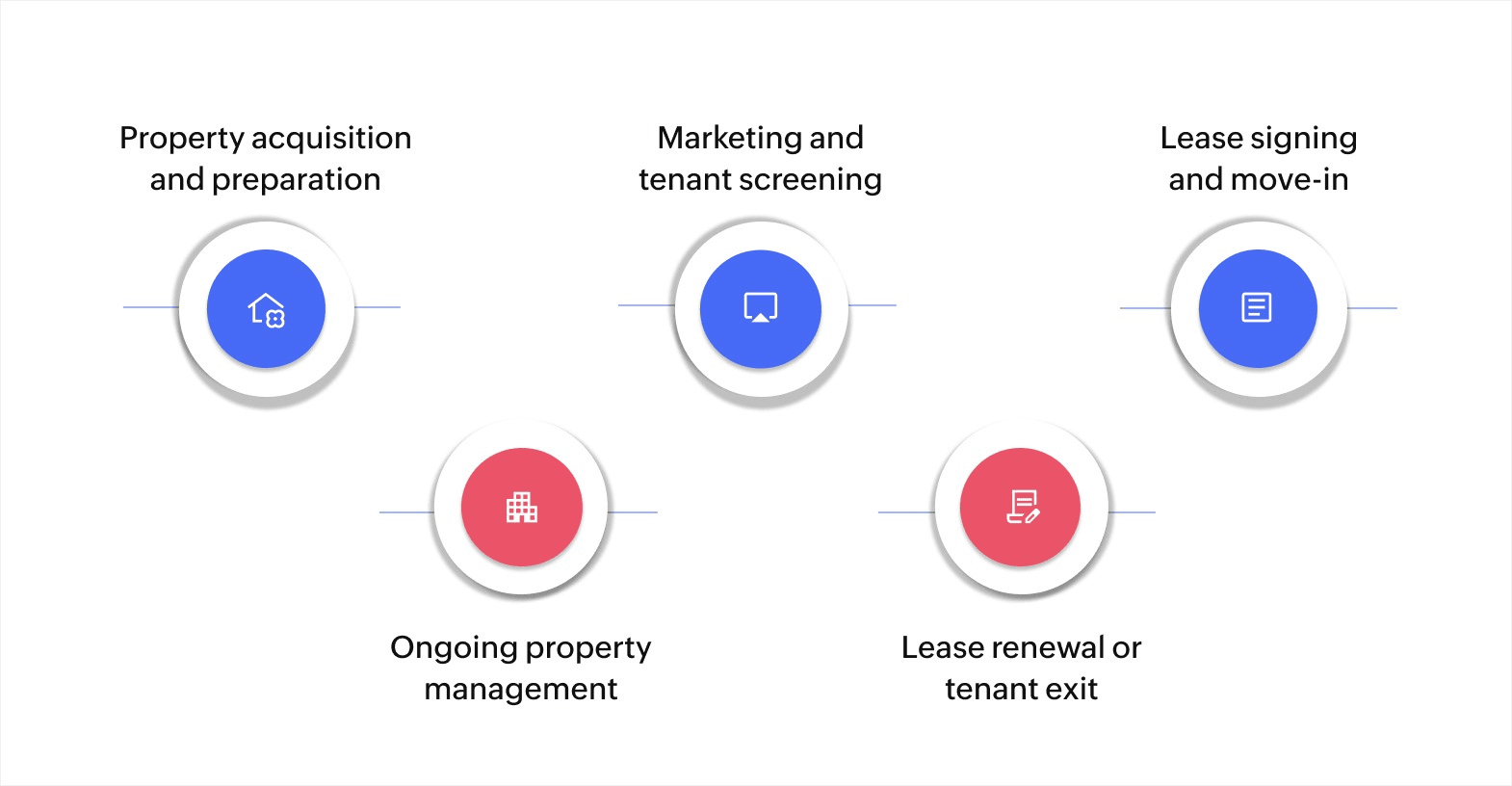
Managing rental properties follows a predictable sequence from acquisition through tenant exit. Knowing this lifecycle helps identify where automation adds the most value.
Here are the key stages in the property and rental management lifecycle.
1. Property acquisition and preparation
Property acquisition covers evaluating potential properties, conducting inspections, completing purchases, and preparing units for tenants. Initial preparation includes establishing baseline documentation, setting up accounting systems, and creating operational procedures.
2. Marketing and tenant screening
Marketing involves listing available units on rental platforms, conducting property showings, and evaluating prospective tenants. Screening includes credit checks, employment verification, rental history reviews, and reference calls to identify reliable tenants.
3. Lease signing and move-in
This stage covers executing lease agreements, collecting security deposits and first month's rent, conducting move-in inspections, and providing tenants with keys and property information. Lease signing establishes the legal framework for the tenant relationship and documents the property's condition.
4. Ongoing property management
Ongoing management includes monthly rent collection, handling maintenance requests, conducting property inspections, addressing tenant concerns, and managing vendor relationships. This stage consumes the most time in property management and benefits significantly from automation.
5. Lease renewal or tenant exit
This stage involves evaluating lease renewals, negotiating new terms, or managing move-out processes, which includes final inspections, security deposit returns, and property turnover. Quick turnover reduces vacancy costs, making this stage critical for maintaining cash flow.
Each lifecycle stage involves multiple coordination tasks. Automation reduces the time spent managing transitions while improving accuracy across documentation, communication, and financial tracking.
How automation differs across property types
Property management automation needs vary significantly based on property type. Residential, commercial, short-term rentals, and multi-unit properties each have different operational priorities and tenant expectations.
Here's how automation priorities differ by property type.
Residential properties
Residential properties focus on tenant screening, lease management, maintenance coordination, and rent collection automation. Single-family homes need simple systems, while small multi-unit buildings (typically 2–10 units) benefit from centralized tenant communication and maintenance tracking.
For instance, a property manager overseeing five single-family homes can automate rent reminders, maintenance request forms, and lease renewal notifications to reduce time spent coordinating with individual tenants.
Commercial properties
Commercial properties emphasize lease administration for multi-year agreements, common area maintenance (CAM) charges, and tenant improvement coordination. Commercial tenants expect professional communication and detailed financial reporting.
For example, managing a small retail plaza requires tracking percentage rent clauses, coordinating shared maintenance costs across tenants, and generating detailed financial statements showing each tenant's contribution to property expenses.
Short-term rentals
Short-term rentals require dynamic pricing, frequent turnover management, guest communication automation, and cleaning coordination. These properties operate more like hospitality businesses with multiple bookings per month requiring quick responses and flexible scheduling.
For instance, a property manager handling vacation rentals needs automated pricing that adjusts daily based on local events, instant booking confirmations, pre-arrival messages with check-in instructions, and cleaning schedules that update automatically after each guest departure.
Multi-unit residential complexes
Multi-unit complexes benefit from bulk operations automation including mass communications, maintenance request management across many units, and amenity booking systems. Scale creates opportunities for dedicated systems handling specific functions like package management, amenity reservations, and visitor parking.
For example, a 50-unit apartment building can implement tenant portals where residents submit maintenance requests, book shared amenities, receive community announcements, and pay rent through a single platform that reduces front-office coordination.
Benefits of property management automation
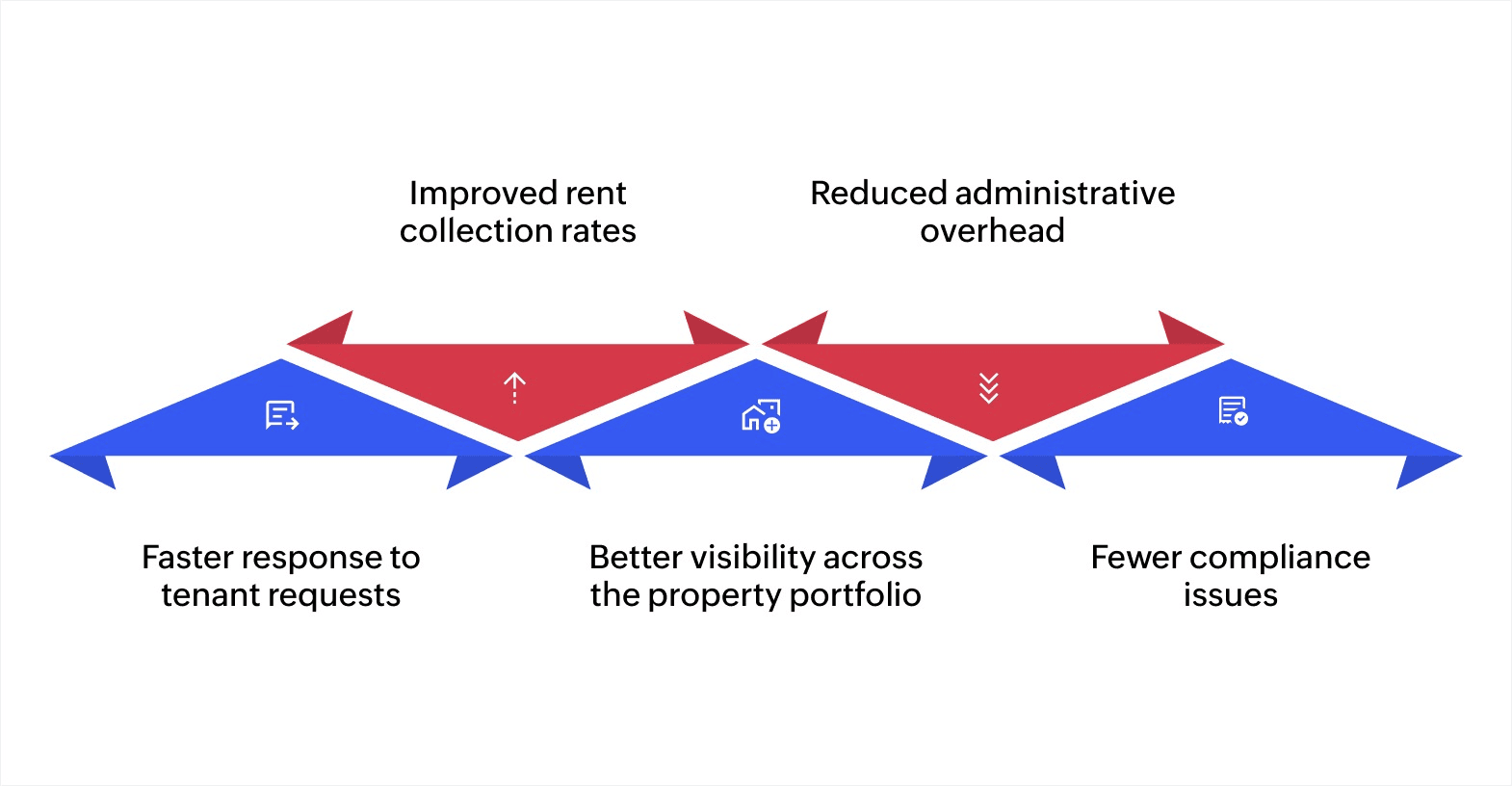
Automation removes coordination overhead from property management, allowing managers to handle more properties without proportional increases in staff time while improving accuracy and tenant satisfaction.
Here are the key benefits automation brings to property management.
Faster response to tenant requests
Digital systems route maintenance requests directly to the appropriate vendors, automatically send status updates to tenants, and track resolution without manual follow-ups. Tenants receive immediate acknowledgment and regular updates, improving satisfaction even when repairs take time.
Improved rent collection rates
Payment reminders, online payment options, and late fee calculations reduce missed payments and time spent chasing overdue rent. Tenants can set up recurring payments, eliminating the need to remember due dates each month.
Better visibility across the property portfolio
Centralized dashboards show occupancy rates, maintenance costs, rent collection status, and financial performance across all properties in real time. Property managers identify problems early and make data-informed decisions about pricing, maintenance budgets, and property improvements.
Reduced administrative overhead
Automation handles repetitive tasks like sending lease renewal notices, generating monthly financial reports, and updating tenant records without manual data entry. Property managers redirect saved time to higher-value activities like property improvements, tenant relationships, and portfolio expansion.
Fewer compliance issues
Tracking of lease expirations, required inspections, and regulatory deadlines with automated systems reduces the risk of violations and associated fines. Systems flag upcoming deadlines and store documentation proving compliance if questions arise.
These benefits compound as property portfolios grow, making automation increasingly valuable for managers overseeing more than five properties or planning to scale operations.
How to implement property and rental management automation
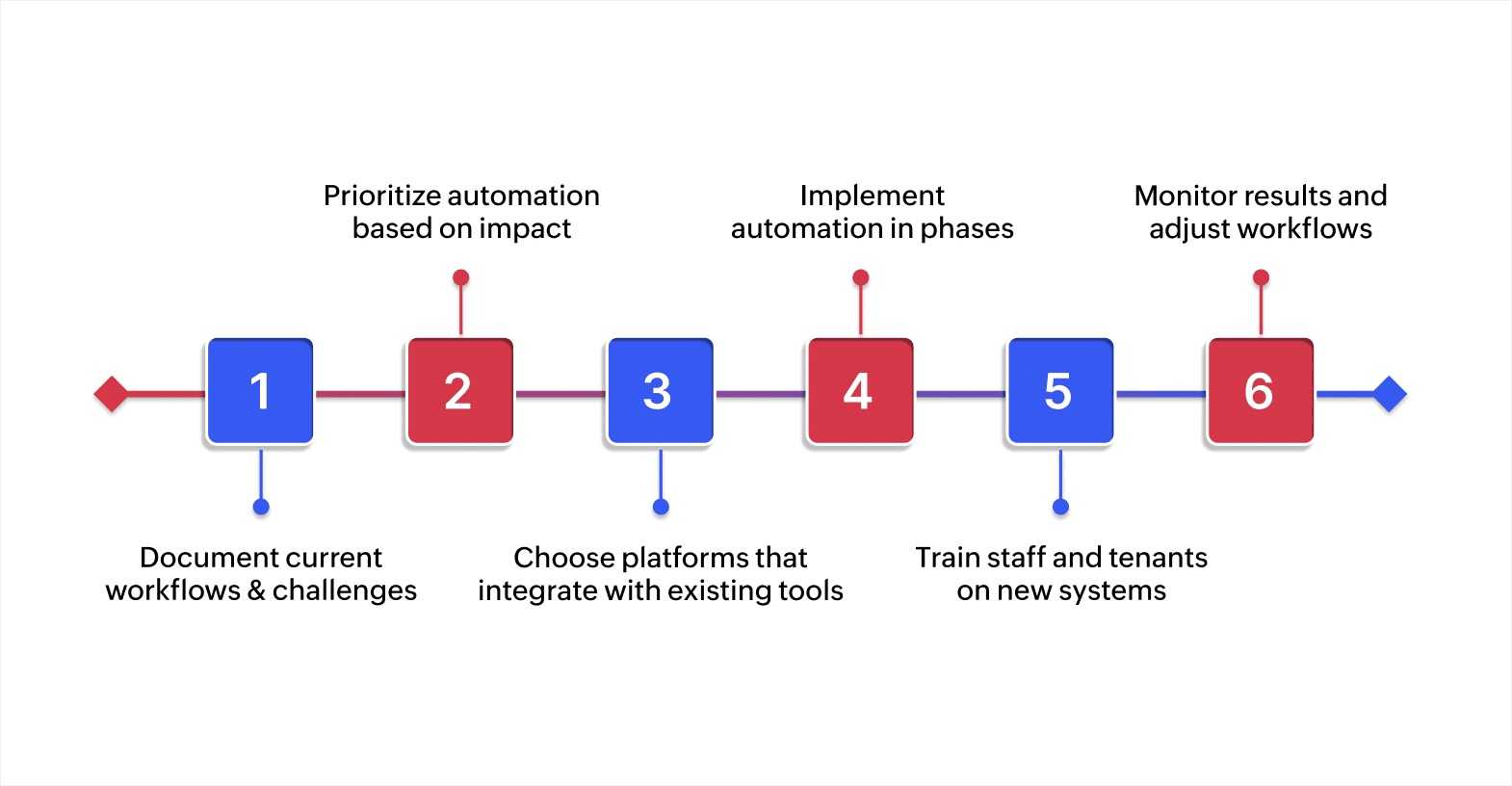
Successful automation starts with identifying high-impact coordination tasks and implementing systems in phases rather than attempting to automate everything simultaneously.
Here's how to approach automation implementation.
Step 1. Document current workflows and challenges
Map existing processes for tenant screening, lease signing, rent collection, maintenance coordination, and financial reporting to identify time-consuming manual tasks. Track how long each process takes and where errors or delays typically occur.
Step 2. Prioritize automation based on impact
Focus first on tasks that consume the most time, create frequent errors, or directly impact tenant satisfaction. Quick wins like automated rent reminders and maintenance request forms demonstrate value and build momentum for broader automation.
Step 3. Choose platforms that integrate with existing tools
Select systems that connect with current accounting software, payment processors, and communication tools to avoid manual data transfer. Integration ensures information stays synchronized across platforms without duplicate entry.
Step 4. Implement automation in phases
Roll out automation one area at a time, starting with tenant-facing features like payment portals before moving to back-office operations. Phased implementation lets staff adjust to new systems and helps identify issues before they affect multiple processes.
Step 5. Train staff and tenants on new systems
Provide clear instructions and support for both property management teams and tenants to ensure successful adoption. Gradual rollouts with optional participation initially help build confidence before requiring system use.
Step 6. Monitor results and adjust workflows
Track metrics like time spent on administrative tasks, tenant satisfaction scores, and rent collection rates to measure automation impact. Use feedback from staff and tenants to refine processes and add automation where additional gaps appear.
This systematic approach reduces implementation risk and ensures automation delivers measurable improvements rather than creating new coordination challenges.
Case study: PropertyAngel’s automation journey with Zoho Creator
Take PropertyAngel, for example. Managing rental contracts and tenant information across several locations was a headache, so they turned to Zoho Creator to build a custom automated solution tailored to their needs. Now, lease management, tenant onboarding, and payment tracking happens smoothly, without piles of paperwork or endless follow-ups.
The results include less manual work, fewer errors, and tenants who feel more connected and cared for. This automation boosted their efficiency and allowed their property managers to focus on delivering better service.
Key metrics to track in property and rental management
Tracking operational metrics helps property managers identify problems early, optimize performance, and demonstrate value to property owners through data-driven insights.
Here are essential metrics to monitor:
| Metric | Definition | Impact |
| Occupancy rate | Units currently leased vs. total available | Shows marketing and pricing effectiveness |
| Average days vacant | Time between tenant move-out and new lease | Measures turnover efficiency and lost income |
| Rent collection rate | On-time payments vs. overdue rent | Indicates tenant quality and payment systems |
| Maintenance response time | Request submission to completion | Affects tenant satisfaction and retention |
| Tenant retention rate | Lease renewals vs. move-outs | Reduces turnover costs and vacancy periods |
| Maintenance cost per unit | Monthly or annual repair expenses | Identifies properties needing major work |
| Net operating income | Rental income minus operating expenses | Shows overall property profitability |
| Owner satisfaction scores | Regular owner feedback ratings | Flags service gaps before losing clients |
Automated dashboards can track these metrics in real time, showing trends across properties and alerting managers to issues requiring immediate attention.
Self-management, property management services, or software: What's right for you?
There are three main approaches to managing rental properties, each with different time requirements, costs, and levels of control. Here's how these approaches compare.
Self-managing properties
Owners handle all tenant interactions, maintenance coordination, and financial management directly. This approach works well for one or two nearby properties, but becomes overwhelming as portfolios grow or if properties are distant.
Hiring property management companies
Professional management companies handle all operations in exchange for monthly fees plus leasing fees. This provides a hands-off experience for owners but reduces profit margins and limits direct control over property decisions.
Using property management software platforms
Software platforms automate coordination tasks while keeping owners in control of operations, offering a middle ground between full self-management and hiring external companies. This approach has lower ongoing costs than management companies while reducing time spent on administrative work.
Low-code platforms extend this approach further by letting property managers build custom automation that matches their specific workflows rather than adapting to rigid software limitations.
Build custom property and rental management solutions with Zoho Creator
Property managers often find that generic software doesn't match their specific operations, especially when managing different property types or offering unique services to property owners.
Zoho Creator is an AI-powered low-code application development platform that helps you build property and rental management applications tailored to your exact requirements. You can create custom apps for tenant onboarding, lease management, maintenance coordination, rent collection, and financial reporting without extensive coding knowledge.
The platform lets you design workflows that coordinate tasks across properties, build mobile apps for maintenance staff, create tenant portals for self-service, and generate dashboards tracking occupancy rates and financial performance. You can integrate with existing accounting software, payment processors, and communication tools to centralize operations.
FAQ
What tasks take the most time in property management?
Rent collection follow-ups, maintenance coordination, tenant communication, and financial reporting consume the most time. Automation reduces these coordination tasks significantly, letting property managers oversee more properties with similar effort.
When should property managers implement automation?
Property managers should consider automation when spending several hours weekly on coordination tasks, experiencing frequent errors in billing or communication, or planning to grow their property portfolio beyond current capacity.
Can automation handle different property types?
Yes, flexible automation platforms let property managers create different workflows for residential, commercial, and short-term rental properties. Each property type requires specific features like long-term lease management or dynamic pricing for vacation rentals.
What integration capabilities matter most?
Property management platforms should integrate with accounting software for financial tracking, payment processors for rent collection, and communication tools for tenant messaging. These integrations eliminate manual data transfer and reduce errors.
Can small property managers afford automation systems?
Yes, cloud-based property management platforms offer affordable monthly subscriptions for basic automation. Time saved on administrative tasks and improved rent collection typically offset subscription costs within the first few months.
 Merlin
Merlin is our in-house digital workplace content specialist. She spends part of her days combining her passion for writing with marketing. The rest of her time is spent reading manga, battling friends in online games, and discovering new music.