

- HOME
- Inventory Management
- Just-in-time (JIT) inventory: How it works, where it fits, and what it costs you
Just-in-time (JIT) inventory: How it works, where it fits, and what it costs you
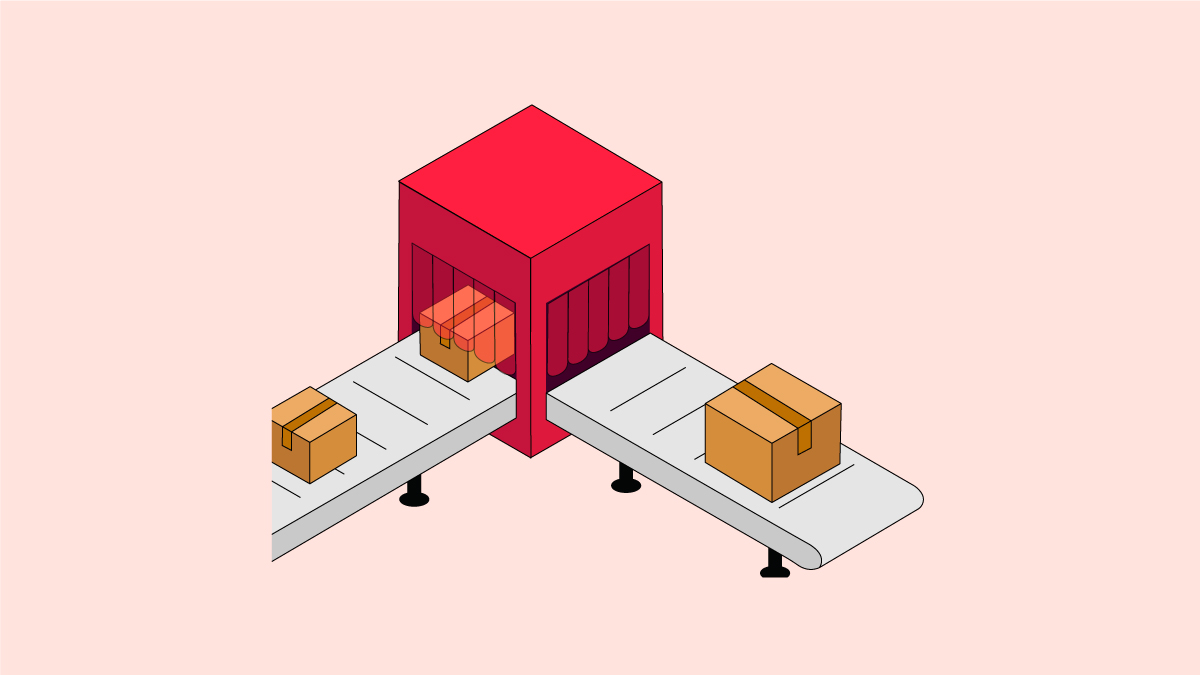
Two costs pull against each other in every operation. Capital sits still in a warehouse of parts that production will not touch for weeks. At the other extreme, one missing component stops a line, and the cost of holding nothing at all becomes obvious within a shift.
Just-in-time (JIT) inventory sits between those two positions. Materials arrive close to the moment they are needed, so less cash is tied up in stock, and the operation depends more heavily on suppliers, data, and coordination to stay running.
What is just-in-time (JIT) inventory?
Just-in-time (JIT) inventory is an approach in which materials arrive as production or sales need them, rather than being stocked in advance. Orders are triggered by actual demand instead of forecasts alone, so less capital sits in stock. JIT began at Toyota and is closely tied to lean manufacturing.
JIT runs on a pull system, where each step produces or orders only what the step after it has consumed. A push system schedules work against a forecast and stores the output until demand catches up. A restaurant kitchen already works on pull for fresh produce, buying what the next few services need, because stock held longer loses value on the shelf.
The approach was developed at Toyota in post-war Japan, under conditions of scarce capital and limited space. It is associated with Taiichi Ohno and Eiji Toyoda and was known as the Toyota Production System (TPS) before the term "JIT" spread through Western manufacturing. JIT and lean inventory management are related without being identical: lean is the wider system of work, and JIT is the timing principle inside it.
JIT does not mean zero inventory
JIT reduces stock held without purpose, and it does not remove stock altogether. Toyota keeps controlled buffers between processes and safety stock to absorb delivery variation. The aim is to size and place buffers deliberately so that stock covers known variability instead of accumulating by default.
Ohno's argument was about overproduction rather than stock in itself. Making more than the next process needs creates the wastes that follow it, including storage, handling, waiting, and defects found too late. Stock is the symptom that makes overproduction visible.
A JIT operation therefore still holds inventory, with every buffer given a reason, a size, and an owner. The costly misreading runs the other way: teams cut safety stock first, treat the reduction as the goal, and discover the coordination work only when the line stops.
How JIT works: The pull system
A JIT flow moves in one loop, repeated continuously:
A demand signal arrives. A customer order, a daily sales forecast, or consumption at the next process downstream.
The schedule is set against takt time. Production paces itself to the rate demand is arriving at.
Each process pulls from the one before it. Work moves only when the following step signals that it has consumed something.
Suppliers deliver in small lots. Deliveries are frequent and sized for short-term use rather than a month of cover.
Production consumes the material. Stock on the floor stays close to the next few hours or days of use.
The signal repeats. Consumption generates the next replenishment signal.
A bicycle manufacturer shows the difference. Under traditional ordering, it buys 1,000 sets of handlebars for the lower unit price, then carries the space, the capital, and any design change for months. Under JIT, handlebars arrive in small batches timed to the assembly schedule, and the saving comes from what the plant no longer holds.
The methods behind JIT
Keeping that loop running on small lots takes a set of established methods.
Core methodologies
Kanban: A signalling system, usually cards or bins, that authorizes replenishment only when material has been consumed. It turns the pull principle into a daily routine.
Heijunka: Levelling production so that volume and mix stay even across a period, rather than swinging between idle and overloaded days. Level demand is what lets suppliers deliver small quantities predictably.
Jidoka: Building in the ability to stop when something goes wrong, by machine detection or by an operator halting the line. A JIT line cannot absorb defects, so problems are caught where they occur.
Kaizen: Continuous improvement in small steps, driven by the people doing the work. Each stoppage JIT exposes becomes an improvement item rather than a reason to rebuild the buffer.
Supporting techniques
Takt time: The rate production has to run at to match demand. A plant building 100 bicycles in an 8-hour shift has 480 minutes available, so takt time is 4.8 minutes per bicycle (illustrative). Every process is then designed to work at that pace.
Single-minute exchange of dies (SMED): Methods for cutting changeover time between products. Short changeovers make small production runs affordable, which is what allows the mix to change without building stock.
Supplier partnership programs: Long-term agreements, shared schedules, and joint improvement work with a small group of suppliers, since JIT makes the supply base part of the production system.
Lead-time reduction: Shortening and stabilizing internal and supplier lead times through nearer sourcing, faster processing, or smaller transfer batches.
The order the methods have to come in
Sequence matters more than the individual tools:
Stability and standard work first. Kanban laid over unstable processes produces stoppages rather than flow, because the signals reflect chaos rather than demand.
Levelling before Kanban. Signals from lumpy demand simply pass the lumps to the supplier.
SMED before small lot sizes. Small lots without fast changeovers move cost into setup time instead of removing it.
Benefits of JIT
Those methods exist because the gains below only arrive when the conditions behind them hold. Each benefit comes with the condition attached.
What JIT frees up
Lower holding cost
Less average stock ties up less capital, space, and insurance. This holds where replenishment is reliable enough that smaller lots do not stop work.
Less obsolescence and dead stock
Items arrive close to use, so fewer expire or become outdated in storage. The condition is predictable short-horizon demand on those items.
A shorter cash conversion cycle
Material converts into sales sooner after it is paid for, provided payment terms are not worsened to fund frequent delivery.
Better use of space
Floor and rack space is released as stock falls, and the gain is real only if that space is reassigned rather than refilled.
What JIT exposes
Problems surface faster
Small buffers stop concealing late deliveries and quality defects, which helps only where each stoppage is investigated instead of absorbed by rebuilding stock.
Less handling damage
Stock is moved and stored fewer times, once receiving, and the line-side layout suits small, frequent drops.
Easier engineering changes
Less old stock has to be consumed or written off when a design changes, as long as change notices reach suppliers with agreed notice periods.
Risks and disadvantages of JIT
The same thin buffers that expose problems also remove the cushion that used to absorb them.
Supplier failure and single sourcing
One supplier's disruption can halt production within days when no alternative is qualified. Dual-source critical parts, qualify alternates before they are needed, and map second-tier dependencies.
Demand spikes with no buffer
An unexpected order arrives and cannot be filled, so the sale goes elsewhere. Keep buffers on volatile items and share forecasts and promotion plans early enough for suppliers to act on.
Freight cost rising as lots shrink
Delivery cost per unit climbs as frequency increases, and the freight bill can absorb the holding cost saved. Consolidate routes, and compare the two costs before increasing frequency again.
Supplier minimum order quantities
The supplier will not ship the small lot the schedule needs. Negotiate order quantity and delivery frequency together, and leave items where that fails on a cyclical order pattern.
Price exposure on frequent small buys
Volume discounts disappear as order sizes fall. Blanket agreements that fix price and total quantity, with scheduled releases against them, keep the pricing while changing the delivery pattern.
Cost shifted to the supplier
The supplier holds the stock instead, and either the price or the reliability degrades to pay for it. Share schedules and work on lead-time reduction jointly rather than pushing delivery frequency alone.
Staff and process discipline
Counts drift, signals get ignored, and the line stops for reasons nobody can trace. Standard work, training and regular count audits keep the system honest.
Long or variable inbound transit
Imported parts arrive in unpredictable windows, and the kanban arithmetic above shows what that does to stock. Run JIT on the reliable segment of the chain and buffer the unreliable one.
JIT in manufacturing vs. JIT in distribution and retail
Most of what has been described so far assumes a production line. The principle travels to distribution, though not every control does.
In manufacturing, JIT governs when materials arrive at a line running to takt time, and the controls are kanban signals, leveling, and changeover time. Success means the line runs without stoppage on minimal material.
In distribution and retail there is no line, so JIT becomes frequent, small replenishment against actual sell-through. The controls are order frequency, supplier lead time, and reliable stock data, and success means availability holds while average stock falls. Takt time and levelling have no equivalent here; small lots, short lead times, accurate counts, and supplier reliability all transfer. More on the mechanics in advanced inventory replenishment strategies.
Is JIT right for your business?
JIT is not an all-or-nothing switch. It is applied item by item, with the fastest-moving predictable SKUs moving first and long-tail, single-sourced or long-lead items keeping their buffers.
Signs of a good fit
Predictable, repeating demand
Suppliers within reliable transit distance
Low changeover cost, or a plan to reduce it
High holding cost or obsolescence risk on the items concerned
Accurate stock data and disciplined counts
Signs of a poor fit
Long or highly variable inbound lead times
Single-sourced critical parts with no qualified alternate
Supplier minimum order quantities that force large lots
Volatile or promotion-driven demand
Counts that do not match what is on the shelf
Lines that cross long domestic transit or arrive from overseas cannot run true JIT, whatever the software does. Plan around the reliable segment of the chain, and hold the buffer where variability enters.
Order volume also decides what suppliers will agree to. A small buyer may not command daily deliveries or short lead times, which is a commercial constraint rather than a technology gap, and it points to a middle position: frequent replenishment on the top items and conventional cover on the rest.
How to move to JIT
Measure the baseline. Record inventory turns, days of stock, stockout frequency, and lead-time variability by supplier so the change can be judged later. The reorder point calculator is a quick way to see where current levels sit.
Pick the pilot items. Choose fast-moving, predictable parts with short lead times and a supplier willing to work on the change.
Stabilize processes and counts. Fix count accuracy and process variation before changing order patterns.
Cut changeover and setup time. Where lot size is driven by setup cost, reduce the setup before reducing the lot.
Renegotiate with suppliers. Cover delivery frequency, lot size, minimum order quantity, price, and notice periods in one conversation.
Introduce pull signals. Put kanban or equivalent signals on the pilot line or item group.
Run for a defined period. Hold the pilot long enough to see a full demand cycle, then compare against the baseline.
Expand or stop deliberately. Extend to the next item group if the numbers hold, and revert if they do not.
What your inventory system needs to support JIT
Those numbers, and the signals behind them, all come out of the same records. A JIT inventory system has to show, at any moment, what is on hand and what is on the way.
Accurate stock by location, in real time. Pull signals are only as good as the count behind them (real-time inventory management).
A reorder point per item. Levels set item by item, not by blanket rules.
Supplier lead-time history. Without it, buffers are guesses.
Purchase and receiving records per item. The trail showing what was promised and what arrived.
Multi-warehouse visibility. Stock in the wrong location is unavailable stock.
Reporting that exposes variability. Lead-time spread and stockout patterns, not just current quantities.
For how this fits a plant's wider material flow, see the manufacturing inventory management guide.
Where Zoho Inventory fits
Zoho Inventory covers the buyer's side of this workflow. You can set a reorder level and a preferred vendor for each item, with a notification when stock reaches that level, and track stock across multiple warehouses as it moves. Serial and batch tracking helps on items where age or traceability decides how small a buffer can safely be.
Frequently Asked Questions
Just-in-time (JIT) inventory means ordering and receiving materials close to the moment they are used, rather than holding weeks of cover. Demand pulls replenishment through the operation, so each delivery matches near-term need. Less capital sits in stock, and the operation depends on reliable suppliers and accurate stock data.
No. A JIT operation still holds buffers, and the difference is that each one is sized on purpose. A buffer covers measured variation, such as the spread between a supplier's best and worst delivery, and it gets reviewed when that spread changes. Stock that no one can attach a reason to is what JIT removes.
Just-in-time (JIT) sizes stock to near-term consumption and rely on frequent, reliable supply. Just-in-case (JIC) holds extra cover so that demand spikes or supply failures can be absorbed. JIT frees capital and exposes problems quickly, while JIC protects availability at a higher carrying cost. Many operations run JIT and JIC on different items.
Economic order quantity (EOQ) calculates one order size that balances ordering cost against holding cost, then repeats it in cycles. Just-in-time (JIT) orders small quantities as consumption signals them and works on reducing setup and lead times so small orders stay affordable. EOQ suits stable, low-value items; JIT suits fast-moving ones.
Kanban sizing is the clearest example. A line circulates a fixed number of cards, each authorizing one container of parts, and an empty container is what triggers the next delivery. Replenishment follows consumption rather than a monthly order. The worked example above shows the calculation and what happens to stock when the supplier lead time doubles.
The main disadvantages are exposure to supplier failure, no cover for demand spikes, higher freight costs as lot sizes fall, conflict with supplier minimum order quantities, loss of volume discounts, and the process discipline required. Single sourcing and long inbound transit make each of these worse. Dual sourcing and sized buffers reduce most of the exposure.
Yes, on selected items. Start with one supplier and a short list of fast-moving parts, and agree on delivery frequency before cutting any buffer. Small buyers usually earn shorter lead times by concentrating volume with fewer suppliers, rather than by asking for more frequent drops across the same spread of orders.
No. Lean manufacturing is the wider system that covers how work flows, how quality is built in, and how improvement happens. Just-in-time (JIT) is the timing principle within it, governing when materials and work arrive. A business can adopt JIT practices without running a full lean program.