Top 5 HCM trends that HR leaders should look out for
- Last Updated : July 7, 2026
- 171 Views
- 3 Min Read

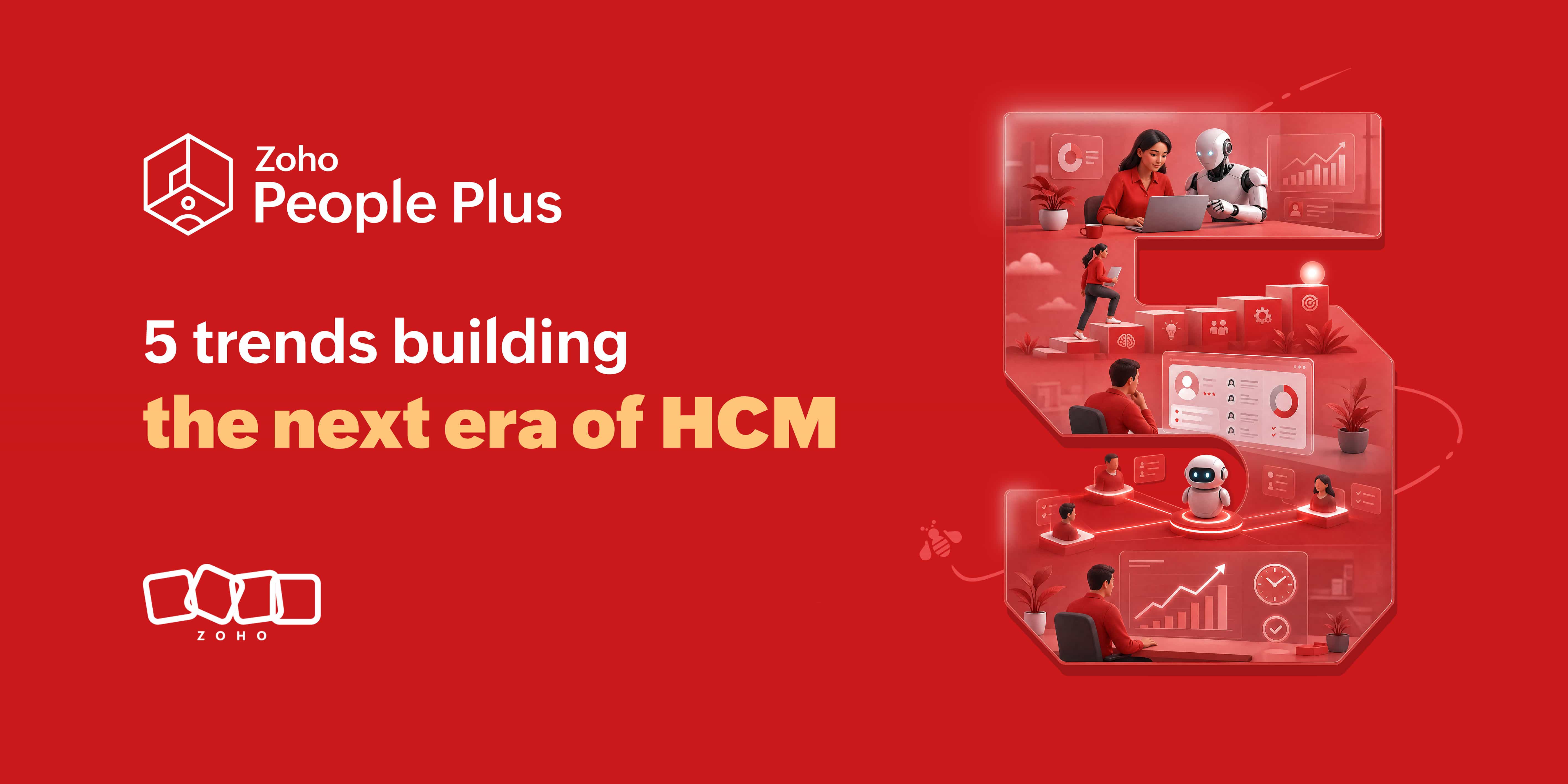
The AI revolution has caused HR teams to rethink how work gets done, how employees grow, and how to remain a strategic partner to organizations. This goes beyond just adopting new technology. HR is striving hard to build workplaces that are agile, employee-centric, and AI-powered.
Here are five key HCM trends shaping the future of work.
#1: AI and employees working together
According to a Microsoft study, 85% of users say AI helps them focus on their most important tasks, while 83% say it lets them enjoy their work more. Employees are using AI to do everything from basic email drafting and meeting summaries to research and data analysis. While AI was initially seen as a tool for automation, today, it's a workplace assistant, creating avenues for employees to improve efficiency so they can focus on strategic, high-level tasks. The future of work will focus on employees and AI collaborating effectively to reduce manual work rather than replacement.
#2: Skills-first mindset
Talent management is now shifting from hiring for credentials and job titles to hiring for skills and growth potential. Organizations are prioritizing reskilling, upskilling, and workforce agility over traditional career paths, so they can build a future-ready workforce, close skill gaps much faster, and respond to changing business conditions.
According to a recent SHRM study, over one-third of organizations reported often or almost always using skills-first strategies in their hiring processes. For instance, organizations may start building internal project or task marketplaces that match employees to different projects based on the skills they possess, rather than hiring externally. If a marketing team needs someone with data visualization skills for a short-term project, the platform can identify employees across the organization who already possess those skills, even if their current role is unrelated.
#3: AI in HR decision-making
HR teams are making use of AI and workforce data to identify workforce patterns, gain deeper insights, and make better talent decisions. As AI becomes more integrated into decision-making, HR teams can better align their talent strategies with business goals, while improving employees' experience through personalized and timely decisions.
According to AIHR, 74% of organizations report measurable improvements in workforce experiences through the use of people analytics. For instance, AI and workforce analytics can help HR teams predict what skills the organization may need in the future and whether the current workforce is equipped for it. If a company plans to expand its AI product offerings over the next two years, HR teams can use workforce data to identify:
- Which teams may require new technical skills
- What skill gaps currently exist
- Which employees can be upskilled internally
- What roles the company may need to hire for in the future
This way, organizations can plan proactively to rethink their hiring and training strategies before the skill shortage starts to affect their business success.
#4: The rise of agentic AI in HR
AI is also becoming more action-oriented and independent rather than simply answering queries. AI agents can actually execute routine tasks instead of waiting for manual intervention, which helps improve workplace responsiveness and reduces repetitive workload for HR teams and even employees.
According to PwC, agentic AI can already support more than 70% of HR processes, since it brings together autonomy, learning, and orchestration. For instance, AI-powered scheduling assistants can automatically coordinate with candidates to finalize interview slots, manage their HR team’s calendars, send reminders for interviews, and even reschedule interviews without needing any manual intervention. Similarly, AI-powered learning assistants can recommend personalized courses for employees based on their skill gaps and upcoming projects.
#5: Revisiting productivity
Organizations are moving beyond hours worked and tasks completed to focus on the outcomes, impact, and collaboration. This lets employees focus on smarter and higher-value work rather than longer working hours. For example, a marketing team may be evaluated based on campaign performance and business impact rather than the number of campaigns executed. Similarly, a customer support team may no longer be evaluated only on the number of tickets resolved per day. Organizations may also consider customer satisfaction scores, resolution quality, and how effectively issues are handled.
Wrapping up
In the future, organizations that successfully balance AI and employee experience to build more agile and resilient workplaces. While technology continues to transform the world of work, the real focus for HR leaders will be on creating workplaces where people and AI can work together effectively. From adopting skills-first strategies to leveraging AI-driven insights and rethinking productivity, it's clear that HCM is evolving from process focused to people and impact-focused.