

- HOME
- Taxes & compliance
- Common tax compliance mistakes Indian startups should avoid
Common tax compliance mistakes Indian startups should avoid
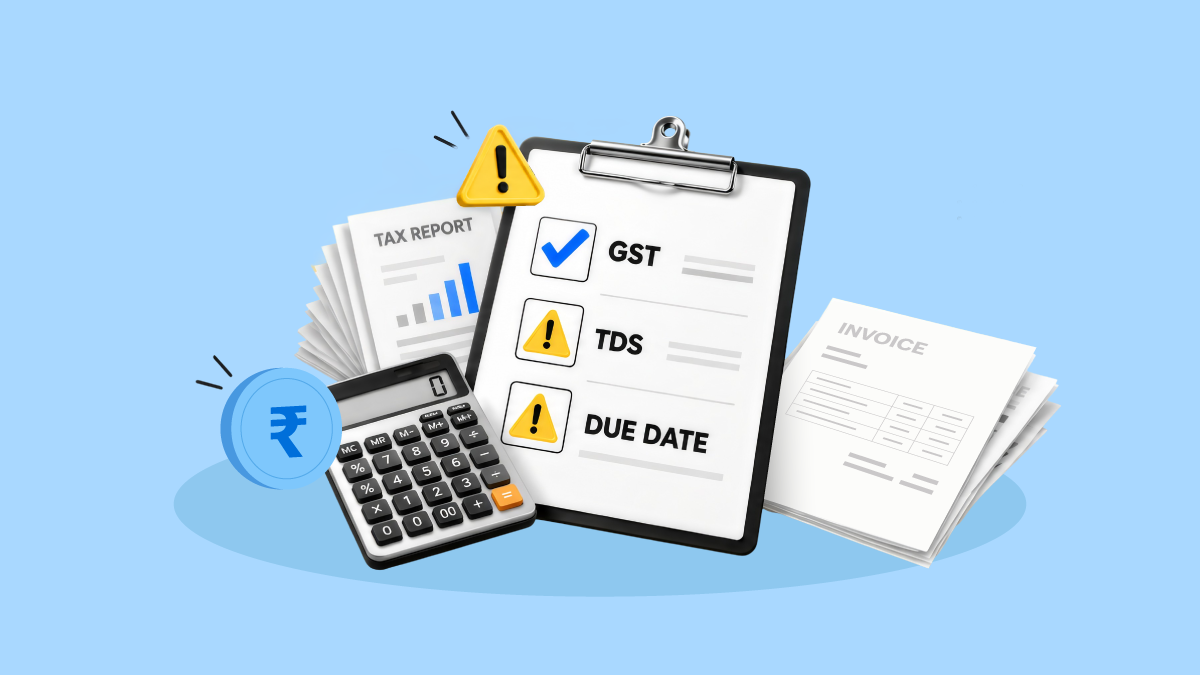
Tax compliance rarely tops a founder's to-do list until a notice from the GST portal or the Income Tax Department lands in their inbox. For Indian startups, compliance isn't a once-a-year event; it's a running obligation across GST, TDS, advance tax, and ROC filings. Here are some mistakes that trip up founders most often, and how to steer clear of them.
Registering for GST at the wrong time (or with the wrong details)
Founders often miscalculate when they cross the mandatory GST registration threshold, especially once interstate sales enter the picture, many wrongly assume only local turnover counts. The GST Network now cross-references turnover data with income tax and banking records, which makes delayed registration highly visible and can trigger retroactive tax liability plus interest.
Mismatched GSTR-1 and GSTR-3B filings
A surprisingly common error is filing GSTR-3B in a hurry without reconciling it against GSTR-1. When outward supply figures in the two returns don't match, say, sales reported differently across the two forms, it raises a red flag and can attract a tax demand with interest.
Claiming Input Tax Credit without reconciliation
Claiming ITC based on your own books, rather than what's reflected in GSTR-2B, is one of the most frequent and expensive mistakes startups make. If a vendor hasn't filed their GSTR-1, the invoice simply won't show up in your GSTR-2B, and the credit gets blocked regardless of whether you already paid the tax. Blocked credits on items like food, personal expenses, and specific vehicle costs, along with the 180-day vendor payment rule, catch founders just as often.
Getting TDS wrong on rent, professional fees, and payroll
Many startups forget to deduct TDS on professional fees, rent, and contractor payments, or miscalculate it on employee perquisites like ESOPs. Payroll and finance teams that aren't tracking these obligations closely often discover the gap only when a notice arrives.
Underpaying or ignoring advance tax
Once a startup starts turning a profit, advance tax becomes due in quarterly installments not just at year's end. Paying everything in one lump sum after the financial year closes, instead of installments as profits accrue, attracts interest under the Income Tax Act and invites closer scrutiny.
Missing ROC deadlines and treating compliance as annual
Annual filings like AOC-4 and MGT-7 with the Registrar of Companies, DIR-3 KYC for directors, and board resolution records for event-based filings are frequently overlooked. The single biggest mistake founders make is treating compliance as something to handle once a year, when in reality it has monthly (GST, TDS), quarterly (advance tax), and annual (ROC, ITR) components running in parallel.
Building a "compliance habit," not a "compliance fire drill"
Most of these mistakes share a common root: fragmented records, manual reconciliation, and deadlines tracked across spreadsheets and sticky notes instead of one connected system. Reconciling GSTR-2B before every ITC claim, tracking TDS deductions as payments happen rather than at quarter-end, and getting a clear month-on-month view of tax liability go a long way toward avoiding these errors altogether.
This is exactly where accounting software built for Indian compliance earns its keep. Zoho Books automates GST-ready invoicing, matches your purchase register against GSTR-2B, tracks TDS on payments, and helps you calculate and file returns without switching between spreadsheets and portals so compliance becomes a byproduct of your everyday bookkeeping rather than a quarterly scramble.
This article is for general informational purposes and isn't a substitute for advice from a qualified chartered accountant on your specific situation.
Ready to simplify your startup's tax compliance? 👉 Explore Zoho Books