- HOME
- Data Collection Insights
- Zero-party data: How forms ethically drive better customer insights
Zero-party data: How forms ethically drive better customer insights
- Last Updated : January 12, 2026
- 711 Views
- 5 Min Read
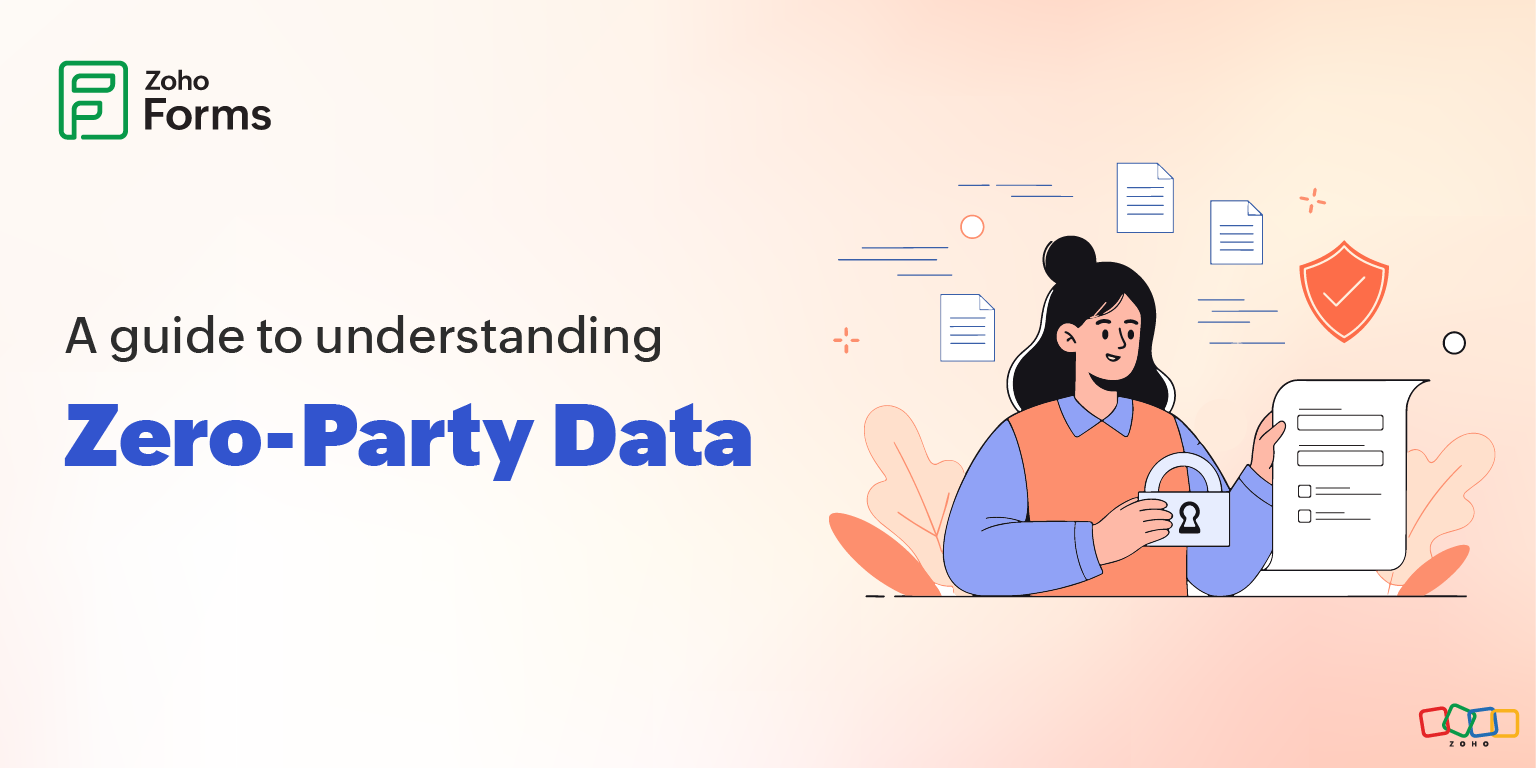
What is zero-party data?
Zero-party data is information that an individual willingly and explicitly shares with a business or brand. Unlike other types of data that are collected by observing behavior (first-party data), zero-party data is information that the user intends to provide, usually in exchange for a better or more personalized experience.
According to Pew Research, 81% of U.S. adults report concerns about how companies handle their personal information, and seek more control over what data they share and when they share it.
The shift toward zero-party data represents a move toward a more transparent and consensual approach to data collection in the age of data theft and AI.
Zero-party vs. other types of data
The key difference between zero-party data and other data types lies in the method of collection and the level of user consent.
| Data type | What it is | How it's sourced | Key characteristic | What it's used for |
| Zero-party | Data explicitly shared by the user | Surveys, quizzes, preference forms, and interactive tools | Willingly provided by the user | Hyper-personalization and product/service improvement |
| First-party | Data collected by observing user interactions | Website analytics, CRM, and user account activity | Gained by observing user behavior on your property | Personalizing content and ads based on behavior |
| Third-party | Data collected externally by entities like data brokers | Passive collection from various online platforms | Collected passively without explicit user consent (this data type is on the decline) | Broad audience targeting based on inferred preferences |
Benefits of zero-party data
When looking into the cookieless future—a digital landscape where third-party cookies for cross-site tracking are being phased out—marketers are being forced to rely on zero- and first-party data, contextual advertising, and new privacy-preserving technology (like Google's Privacy Sandbox) for targeting and personalization. This shift, driven by increased privacy regulations (GDPR and CCPA) and user demand for transparency, insists on zero-party data collection, which offers several critical advantages:
- Higher accuracy & better personalization: Since the data is explicitly provided by the user, it is highly accurate and directly reflects their current preferences and needs. This allows for superior, relevant personalization. A robust form builder ensures you get the right data types (preferences, intent, and demographics) accurately collected.
- Enhanced trust & transparency: Collecting data transparently and with explicit consent builds a strong foundation of trust and fosters long-term consumer loyalty. Users feel in control of their information.
- Privacy compliance: Data collected this way naturally aligns with stringent regulations like GDPR and CCPA as it prioritizes user consent, transparency, and the ability to demonstrate a clear consent trail.
How to collect data directly from users: The requirements
As zero-party data relies on explicit sharing, the methods used must be highly engaging and structured, for e.g., conversational, easy-to-digest card forms. A specialized online tool is essential to deploy these methods effectively, manage the data, and integrate it into your marketing stack.
A preference center
This is the ultimate source of zero-party data. A preference center is a dedicated form where users can state their preferences regarding communication frequency, content topics, and channel preferences.
- Key tool feature: The ability to create complex, secure, and user-editable forms that integrate directly with your CRM is non-negotiable for managing these centers.
Surveys and quizzes
Surveys and quizzes are the vehicles for conversational data collection, providing rich zero-party data.
Try pre-purchase quizzes that ask questions like "What is your main goal?" or "What is your budget for this solution?" These give you zero-party data for intent and budget (highly predictive data used for lead scoring and accurate routing).
You can also try interactive polls with questions such as "Which feature would you use most often?" This gives you insight into product development (direct input that informs R&D decisions and messaging).
- Key tool feature: Your chosen solution must enable dynamic forms with conditional logic and progressive profiling to ensure users only see questions relevant to their previous answers, maximizing completion rates.
Interactive tools and forms
These methods embed data collection directly into the user experience, making it feel less like a form and more like a service. Tools like ROI calculators or product configurators require users to input specific information in exchange for a customized result, providing explicit intent data.
- Key tool feature: The solution needs to support sophisticated field types beyond basic text boxes to handle these advanced interactive components securely.
A seamless solution: Forms as the data gateway
The shift to zero-party data is crucial, but it introduces a technical challenge: How do you make the data collected in a quiz or survey instantly usable for personalization?
To achieve true hyper-personalization, the data must be accurately and immediately funneled into your existing CRM, email platform, and segmentation tools.
From form to fulfillment: The zero-party workflow
A modern, powerful form solution serves as the ethical gateway, automating the entire zero-party data workflow:
- The consent contract: The customer willingly answers questions within a secure, custom-branded form.This is a straightforward, ethical avenue of data collection.
- Instant capture & validation: The form validates the data on entry, ensuring accuracy, and attaches the explicit consent record.
- The sync gateway: Immediately upon submission, the form's deep integration capabilities push this rich, accurate data directly into your CRM. This is the critical step that bridges ethical collection and hyper-personalization.
- Activation & personalization: Your marketing system instantly receives the new preferences (e.g., "Customer A prefers email and is interested in Product X"). This triggers personalized actions across all touchpoints.
The result is a direct, ethical, and immediate connection between what a customer explicitly tells you and the experience you deliver to them.
Zoho Forms for zero-party data collection
Collecting zero-party data doesn't have to be complicated. Zoho Forms provides a straightforward, no-code environment where businesses can create the transparent, value-driven interactions that modern customers expect.
With access to over 500 ready-to-use templates, you can quickly deploy preference centers or feedback surveys that feel like a natural conversation rather than a data-mining exercise.
The platform simplifies the "ask" by using AI-powered features, like Zia, to help you build forms from text prompts or convert physical documents into digital fields instantly.
Most importantly, it balances personalization and protection; while you gather insights to improve the customer journey, Zoho Forms secures that data with field-level encryption and strict compliance with global standards like GDPR and HIPAA.
Conclusion: Zero-party data is the future of trust
The future of marketing is not about collecting the most data; it's about collecting the best data ethically. By adopting a zero-party data strategy and relying on a robust form platform, such as Zoho Forms, as your primary collection engine, you not only achieve compliance and trust but also unlock the most accurate and valuable personalization data available.
Zero-party data is the key to building relationships where customers feel respected, heard, and—ultimately—stay loyal.
 Arshiya N
Arshiya is product narrative expert at Zoho Forms who specializes in translating intricate technical logic into clear, strategic solutions. With a passion for impactful storytelling and a keen eye for detail, she bridges the gap between complex features and intuitive user experiences to help businesses streamline their data collection. Known for her precision, she is on a mission to turn technical workflows into human-centered narratives. Beyond the desk, Arshiya leans into the complex and the classic, whether challenging herself with meticulous Dutch Master-style paintings or capturing the world through her lens. A traveler and photographer at heart, she finds inspiration in the fine details, infusing her work with visual clarity and creative depth.